4-Bromoaniline → 6-Bromo-4-hydroxyquinolin-2(1H)-one
Reaction equation

BrC1C=CC(N)=CC=1.CC1(C)OC(=O)CC(=O)O1.[Br:19][C:20]1[CH:25]=[CH:24][C:23]([NH:26][C:27](=[O:32])[CH2:28][C:29]([OH:31])=O)=[CH:22][CH:21]=1.CS(O)(=O)=O.O=P12OP3(OP(OP(O3)(O1)=O)(=O)O2)=O>O>[Br:19][C:20]1[CH:21]=[C:22]2[C:23](=[CH:24][CH:25]=1)[NH:26][C:27](=[O:32])[CH:28]=[C:29]2[OH:31]Participants
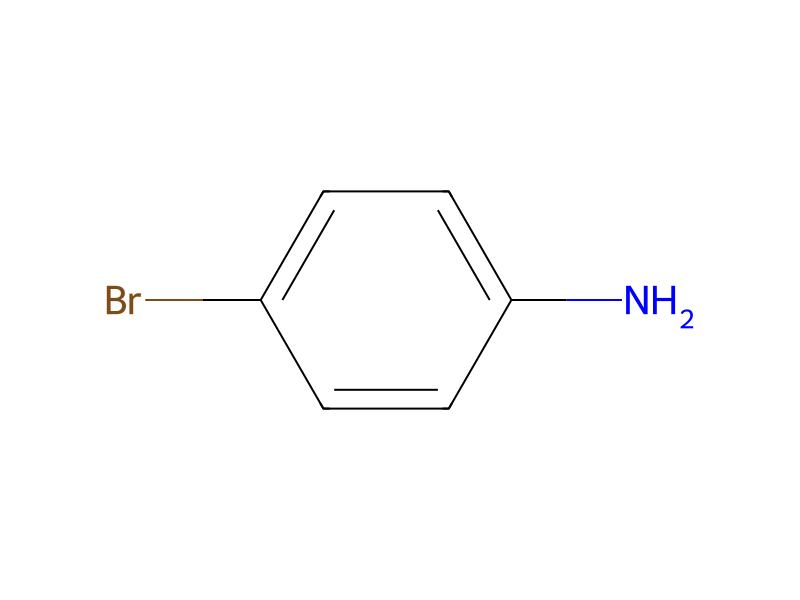



Conditions
- Temperature
- 80 °C
Procedure
According to the general method described in Synth. Commun. 2010, 40, 732, a mixture of 4-bromoaniline (10.0 g, 58.1 mmol) and 2,2-dimethyl-1,3-dioxan-4,6-dione (8.40 g, 58.1 mmol) was heated at 80° C. for 1 hour and cooled to room temperature to receive 3-((4-bromophenyl)amino)-3-oxopropanoic acid as a solid. A stream of nitrogen gas was passed over the solid product to remove liquid acetone formed as a by-product. To this solid was added Eaton's reagent (40 mL) and the mixture was heated at 70° C. for 12 hours and then cooled to room temperature. To the resulting mixture was added water and stirred vigorously to receive a suspension which was filtered. The solid residue was washed with water and dried in air to yield the title compound.
Workup
- temperaturecooled to room temperature
- customto remove liquid acetone
- customformed as a by-product
- temperaturethe mixture was heated at 70° C. for 12 hours
- temperaturecooled to room temperature
- filtrationwas filtered
- washThe solid residue was washed with water
- customdried in air
Sources & evidence
- ORD record
- ord-dd2d501a788d419c98884c7011fe3a6c
- Source dataset
- uspto-grants-2016_05
- Patent number
- US09328095B2
Reaction notes
Loading…