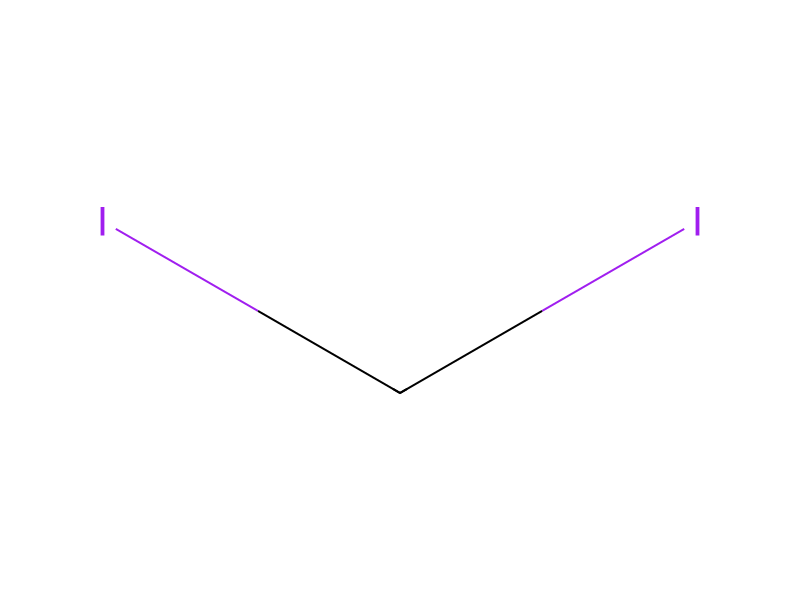
Diiodomethane → HCID 86723026, compound
Reaction equation

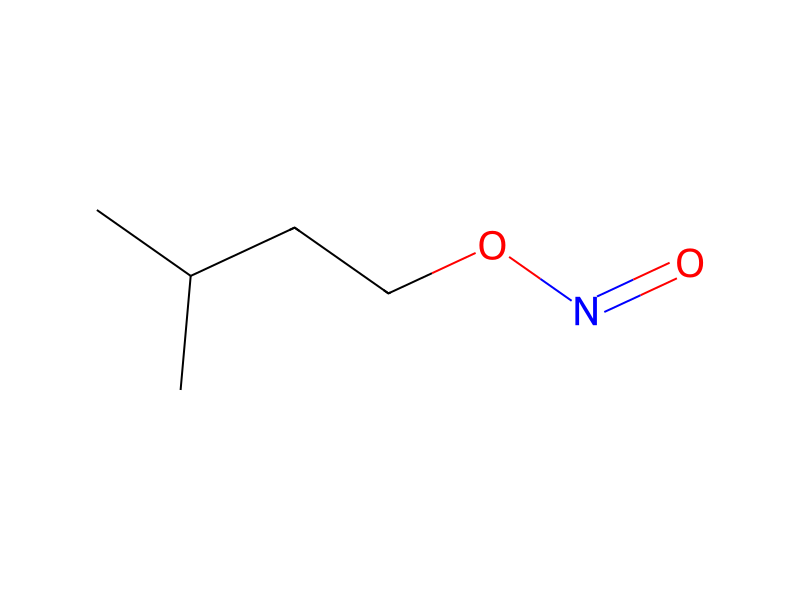
N[C:2]1[N:6]([C:7]2[CH:12]=[CH:11][CH:10]=[C:9]([F:13])[CH:8]=2)[N:5]=[CH:4][C:3]=1[C:14]([O:16][CH2:17][CH3:18])=[O:15].[I:19]CI.N(OCCC(C)C)=O>C(#N)C>[I:19][C:2]1[N:6]([C:7]2[CH:12]=[CH:11][CH:10]=[C:9]([F:13])[CH:8]=2)[N:5]=[CH:4][C:3]=1[C:14]([O:16][CH2:17][CH3:18])=[O:15]Participants
5
Reactant 3

Product 1

Reagents, catalysts & solvents 1

Conditions
- Temperature
- 50 °C
Procedure
Ethyl 5-amino-1-(3-fluorophenyl)-1H-pyrazole-4-carboxylate (518 mg, 2.08 mmol) was suspended in acetonitrile (5 mL) at ambient temperature. Diiodomethane (675 μL, 8.38 mmol) was added followed by isopentyl nitrite (565 μL, 4.21 mmol). The reaction was heated at 50° C. for one hour and was then partitioned between water and ethyl acetate. The aqueous layer was extracted twice more with ethyl acetate. The combined organic layers were dried over anhydrous sodium sulfate. After removal of solvents under reduced pressure, the crude material was purified using silica gel column chromatography (10-25% ethyl acetate in hexanes) to afford ethyl 5-iodo-1-(3-fluorophenyl)-1H-pyrazole-4-carboxylate (589 mg, 1.64 mmol, 79% yield).
Workup
- customwas then partitioned between water and ethyl acetate
- extractionThe aqueous layer was extracted twice more with ethyl acetate
- dry with materialThe combined organic layers were dried over anhydrous sodium sulfate
- customAfter removal of solvents under reduced pressure
- customthe crude material was purified
Sources & evidence
- ORD record
- ord-bf3d2f1d09524be2b54e77bc4fa61c05
- Source dataset
- uspto-grants-2016_05
- Patent number
- US09328116B2
Reaction notes
Loading…