Phenethylamine → 8-Bromo-5-(2-phenylethylcarbamoyl)-5,6-dihydro-1H-pyrrolo[1,2,3-de]quinoxaline-2,3-dione
Reaction equation

[Br:1][C:2]1[CH:3]=[C:4]2[CH2:15][CH:14]([C:16]([OH:18])=O)[N:6]3[C:7](=[O:13])[C:8](=[O:12])[NH:9][C:10]([CH:11]=1)=[C:5]23.[CH:19]1[CH:24]=[CH:23][C:22]([CH2:25][CH2:26][NH2:27])=[CH:21][CH:20]=1>>[Br:1][C:2]1[CH:3]=[C:4]2[CH2:15][CH:14]([C:16](=[O:18])[NH:27][CH2:26][CH2:25][C:22]3[CH:23]=[CH:24][CH:19]=[CH:20][CH:21]=3)[N:6]3[C:7](=[O:13])[C:8](=[O:12])[NH:9][C:10]([CH:11]=1)=[C:5]23Participants
3
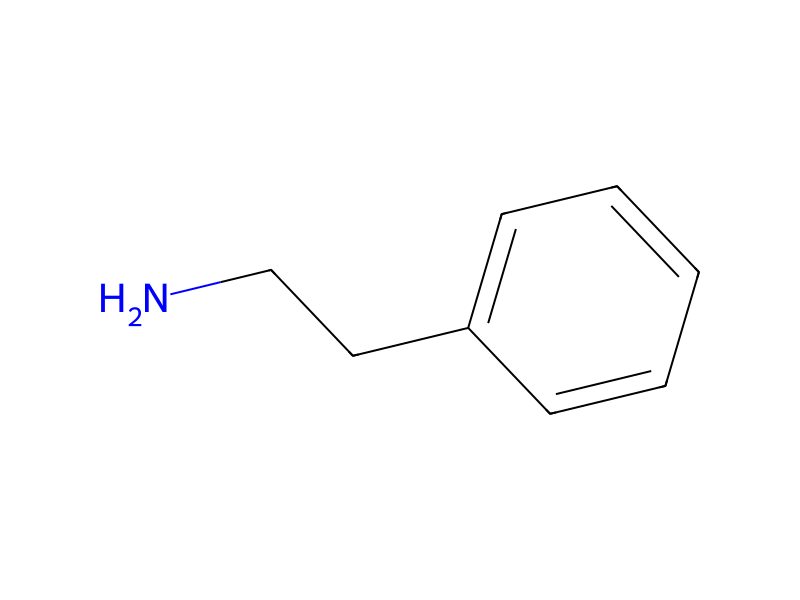


Procedure
A procedure similar to that described in Example 5 was carried out with 8-bromo-5-carboxy-5,6-dihydro-1H-pyrrolo[1,2,3-de]quinoxaline-2,3-dione (300 mg, 0.96 mmol) and β-phenethylamine (133 μL, 1.061 mmol) to give 383 mg of the title compound (96%): mp 246°~249° C. (dec); 1H NMR (270 MHz, DMSO-d6) δ12.01 (s, 1H), 8.41 (t, 1H, J=5.6 Hz), 7.25 (m, 5H), 7.22 (d, 1H, J=1 Hz), 7.07 (d, 1H, J=1 Hz), 5.07 (dd, 1H, J=10, 5 Hz), 3.65 (dd, 1H, J=17, 10 Hz), 3.30 (dt, 2H, J=5.6, 7 Hz), 3.04 (dd, 1H, J=17, 5 Hz), 2.71 (t, 2H, J=7 Hz).
Sources & evidence
- ORD record
- ord-af85d2bc7ffd471b9aacf4bbf20d0da4
- Source dataset
- uspto-grants-1997_04
- Patent number
- US05616586
Reaction notes
Loading…