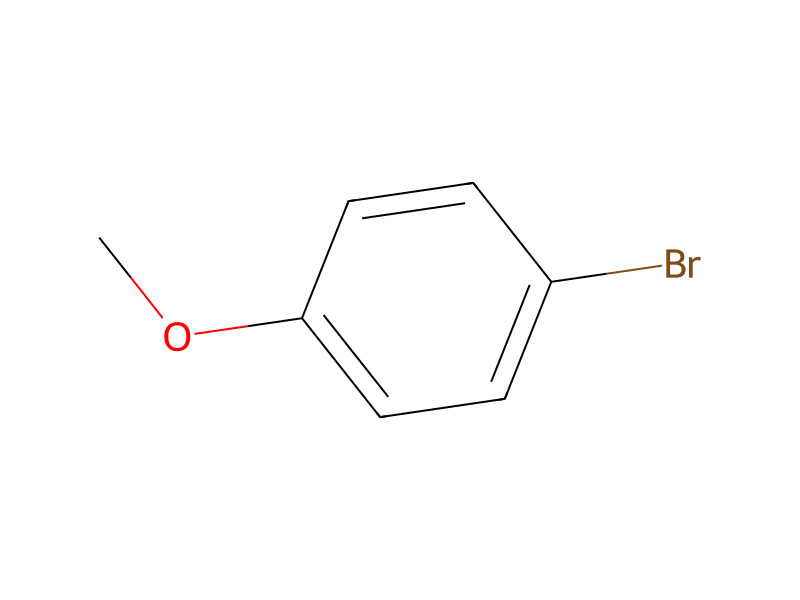
4-Bromoanisole → HCID 67979402, compound
Reaction equation

Br[C:2]1[CH:7]=[CH:6][C:5]([O:8][CH3:9])=[CH:4][CH:3]=1.C([Li])CCC.[C:15]([O:19][C:20]([N:22]1[CH2:25][CH:24]([CH:26]=[O:27])[CH2:23]1)=[O:21])([CH3:18])([CH3:17])[CH3:16]>CCCCCCC.C1COCC1>[C:15]([O:19][C:20]([N:22]1[CH2:25][CH:24]([CH:26]([OH:27])[C:2]2[CH:7]=[CH:6][C:5]([O:8][CH3:9])=[CH:4][CH:3]=2)[CH2:23]1)=[O:21])([CH3:18])([CH3:17])[CH3:16]Participants
6
Reactant 3


Product 1

Reagents, catalysts & solvents 2


Procedure
To 2.2 g (11.8 mmol) 4-bromoanisole in 30 mL dry heptane under nitrogen was added 8.02 mL (1.6 M in hexane, 12.83 mmol) n-butyl lithium dropwise, and the mixture was stirred at room temperature for 30 minutes. The solution was then cooled to −78° C. and a solution of 2.0 g (10.7 mmol) 3-formyl-azetidine-1-carboxylic acid tert-butyl ester (route 18, step a) in 30 mL dry THF was added. The resultant mixture was allowed to warm to room temperature, quenched with 50 mL 1 M sodium bicarbonate and extracted with DCM (2×50 mL). The combined organic layers were dried over Na2SO4. After filtration and evaporation of the solvent the product was purified by column chromatography (silica, heptane/EtOAc 4:1 to 1:1).
Workup
- temperatureThe solution was then cooled to −78° C.
- temperatureto warm to room temperature
- customquenched with 50 mL 1 M sodium bicarbonate
- extractionextracted with DCM (2×50 mL)
- dry with materialThe combined organic layers were dried over Na2SO4
- filtrationAfter filtration and evaporation of the solvent the product
- customwas purified by column chromatography (silica, heptane/EtOAc 4:1 to 1:1)
Sources & evidence
- ORD record
- ord-0606424a02184083940e5ab8d87052e4
- Source dataset
- uspto-grants-2016_05
- Patent number
- US09346816B2
Reaction notes
Loading…