Diisopropylamine → 1-Bromo-3-(2-phenylethynyl)benzene
Reaction equation

[Br:1][C:2]1[CH:7]=[CH:6][CH:5]=[C:4](I)[CH:3]=1.[C:9]1([C:15]#[CH:16])[CH:14]=[CH:13][CH:12]=[CH:11][CH:10]=1.C(NC(C)C)(C)C>C1(C)C=CC=CC=1.C1C=CC([P]([Pd]([P](C2C=CC=CC=2)(C2C=CC=CC=2)C2C=CC=CC=2)([P](C2C=CC=CC=2)(C2C=CC=CC=2)C2C=CC=CC=2)[P](C2C=CC=CC=2)(C2C=CC=CC=2)C2C=CC=CC=2)(C2C=CC=CC=2)C2C=CC=CC=2)=CC=1.[Cu]I>[Br:1][C:2]1[CH:7]=[CH:6][CH:5]=[C:4]([C:16]#[C:15][C:9]2[CH:14]=[CH:13][CH:12]=[CH:11][CH:10]=2)[CH:3]=1Participants
7
Reactant 3


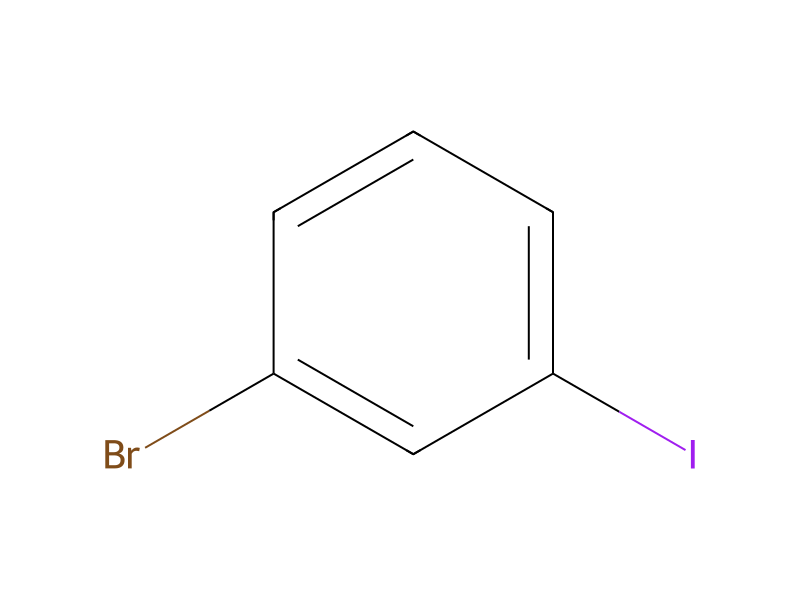
Product 1

Reagents, catalysts & solvents 3



Procedure
1-bromo-3-iodobenzene (15.3 g, 54.0 mmol), phenylacetylene (5 g, 49.0 mmol), tetrakis(triphenylphosphine)palladium (2.8 g, 2.4 mmol) and copper(I) iodide (0.46 g, 2.4 mmol) were dissolved in dry toluene and diisopropylamine (35 mL, 196 mmol) under a nitrogen atmosphere. The reaction was stirred at room temperature overnight. The mixture was extracted with ethyl acetate and the organic layer was dried in vacuo to give the title compound as a residue that was used without further purification.
Workup
- extractionThe mixture was extracted with ethyl acetate
- customthe organic layer was dried in vacuo
Sources & evidence
- ORD record
- ord-a2df377c2a7045e9b9d4e0583c436a6a
- Source dataset
- uspto-grants-2016_05
- Patent number
- US09353089B2
Reaction notes
Loading…