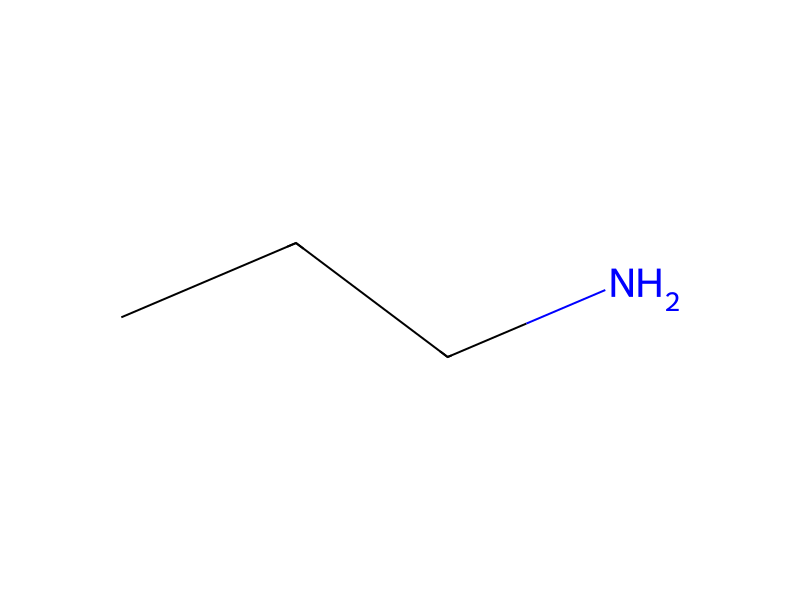
Propylamine → HCID 19960061, compound
Reaction equation

Cl[C:2]1[C:7]([C:8]([NH:10][C:11]2[C:12]([Cl:17])=[N:13][CH:14]=[CH:15][CH:16]=2)=[O:9])=[CH:6][CH:5]=[CH:4][N:3]=1.[CH2:18]([NH2:21])[CH2:19][CH3:20]>O1CCOCC1>[Cl:17][C:12]1[C:11]([NH:10][C:8]([C:7]2[C:2]([NH:21][CH2:18][CH2:19][CH3:20])=[N:3][CH:4]=[CH:5][CH:6]=2)=[O:9])=[CH:16][CH:15]=[CH:14][N:13]=1Participants
4
Reactant 2

Product 1

Reagents, catalysts & solvents 1

Conditions
- Temperature
- 150 °C
Procedure
26.8 g (0.1 mol) of 2-chloro-N-(2-chloro-3-pyridinyl)-3-pyridinecarboxamide were dissolved in 200 ml of dioxane, and the resulting solution was admixed with 21.4 g (0.362 mol) of propylamine. Thereafter, the mixture was shaken in a stainless steel pressure vessel at 150° C. for 6 hours. The reaction mixture was then evaporated in vacuo, and the residue was purified by column chromatography on silica gel, successively using dichloromethane/ethyl acetate 10/1 (v/v) and dichloromethane/cyclohexane/ethyl acetate 1/2/1 (v/v/v) as eluents. The product obtained by evaporation was a highly viscous resin that had a satisfactory quality for the following reaction.
Workup
- customThe reaction mixture was then evaporated in vacuo
- customthe residue was purified by column chromatography on silica gel, successively using dichloromethane/ethyl acetate 10/1 (v/v) and dichloromethane/cyclohexane/ethyl acetate 1/2/1 (v/v/v) as eluents
- customThe product obtained by evaporation
- customfor the following reaction
Sources & evidence
- ORD record
- ord-efbe71241ae747cda889e5c1422a8fdf
- Source dataset
- uspto-grants-1997_04
- Patent number
- US05620974
Reaction notes
Loading…