Diethyl Ether → 2-(4-chlorobenzoyl)-N-allylhydrazinecarboxamide
Reaction equation

[Cl:1][C:2]1[CH:7]=[CH:6][C:5]([C:8]([NH:10][NH2:11])=[O:9])=[CH:4][CH:3]=1.[CH2:12]([N:15]=[C:16]=[O:17])[CH:13]=[CH2:14].C(OCC)C>O1CCCC1>[Cl:1][C:2]1[CH:3]=[CH:4][C:5]([C:8]([NH:10][NH:11][C:16]([NH:15][CH2:12][CH:13]=[CH2:14])=[O:17])=[O:9])=[CH:6][CH:7]=1Participants
5
Reactant 3

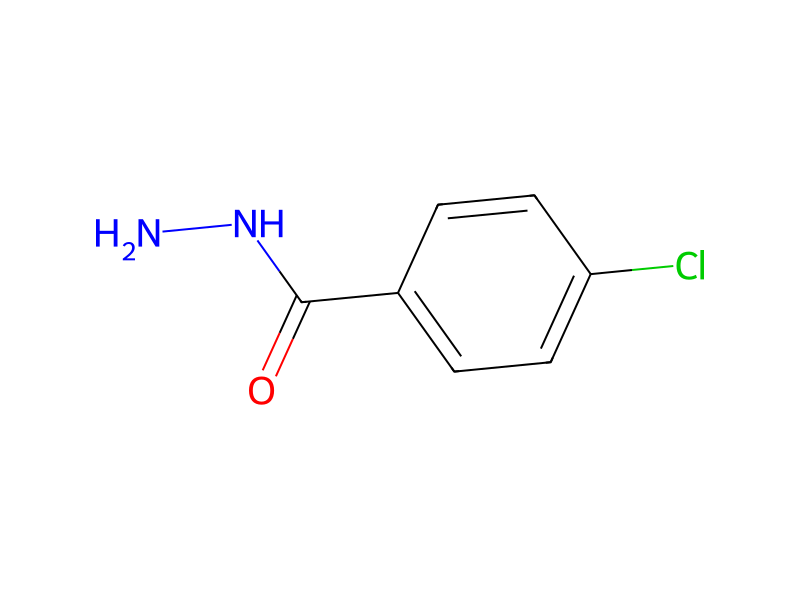

Product 1

Reagents, catalysts & solvents 1

Conditions
- Temperature
- 50 °C
Procedure
An amount of 5.00 g (29.3 mmol) of 4-chlorobenzenecarbohydrazide was suspended in dry tetrahydrofuran (150 ml) at 50° C. and then 2.63 ml (29.9 mmol) of allyl isocyanate in solution in 110 ml of dry tetrahydrofuran were added dropwise. The starting material underwent temporary complete dissolution, and then a fine precipitate was produced. The mixture was stirred at 50° C. for 2 hours. After cooling to room temperature it was admixed with diethyl ether. The colourless solid was isolated by suction filtration, washed with diethyl ether and dried in a high vacuum. This gave 7.42 g (100% of theory) of the target compound.
Workup
- dissolutionThe starting material underwent temporary complete dissolution
- customa fine precipitate was produced
- temperatureAfter cooling to room temperature it
- customThe colourless solid was isolated by suction filtration
- washwashed with diethyl ether
- customdried in a high vacuum
Sources & evidence
- ORD record
- ord-05249b8f506b45a1825876bb1d23e412
- Source dataset
- uspto-grants-2014_10
- Patent number
- US08859601B2
Reaction notes
Loading…