Sodium Iodide → Dpi-221
Reaction equation

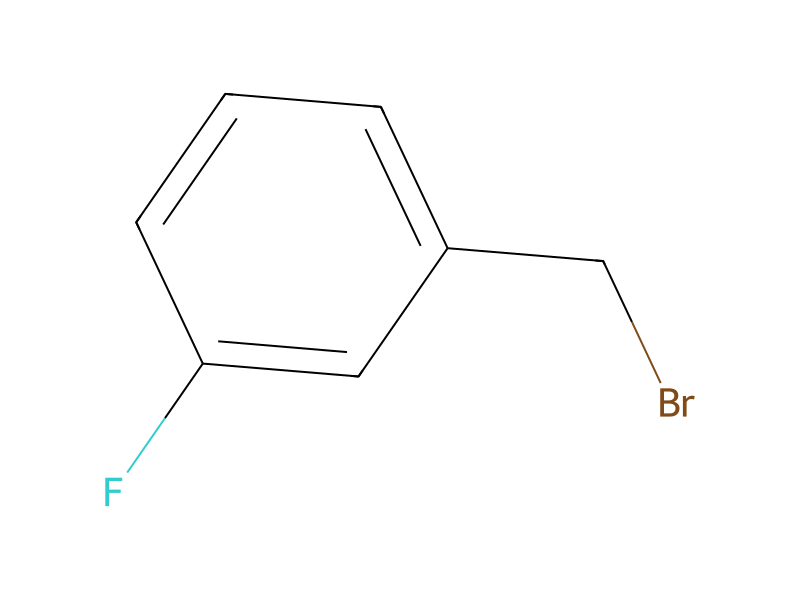
[CH3:1][C@H:2]1[CH2:7][NH:6][C@H:5]([CH3:8])[CH2:4][N:3]1[C@H:9]([C:16]1[CH:28]=[CH:27][C:19]([C:20]([N:22]([CH2:25][CH3:26])[CH2:23][CH3:24])=[O:21])=[CH:18][CH:17]=1)[C:10]1[CH:15]=[CH:14][CH:13]=[CH:12][CH:11]=1.[I-].[Na+].C(N(CC)CC)C.[F:38][C:39]1[CH:40]=[C:41]([CH:44]=[CH:45][CH:46]=1)[CH2:42]Br>C(#N)C>[CH3:1][C@H:2]1[CH2:7][N:6]([CH2:42][C:41]2[CH:44]=[CH:45][CH:46]=[C:39]([F:38])[CH:40]=2)[C@H:5]([CH3:8])[CH2:4][N:3]1[C@H:9]([C:16]1[CH:17]=[CH:18][C:19]([C:20]([N:22]([CH2:25][CH3:26])[CH2:23][CH3:24])=[O:21])=[CH:27][CH:28]=1)[C:10]1[CH:11]=[CH:12][CH:13]=[CH:14][CH:15]=1Participants





Procedure
A solution of 4-((alpha-S)-alpha-((2S,5R)-2,5-dimethyl-1-piperazinyl)benzyl)-N,N-diethylbenzamide (1.898 g, 5.0 mmol) in 25 mL acetonitrile was added to sodium iodide (75 mg, 0.5 mmol) and stirred during the addition of triethylamine (2.5 mL, 1.815 g, 17.94 mmol), followed by 3-fluorobenzyl bromide (1.227 mL, 1.89 g, 10.0 mmol). An immediate turbidity was observed on addition of the 3-fluorobenzyl bromide, thickening to a copious white precipitate over one hour. The flask was sealed under nitrogen and the suspension stirred overnight at room temperature. The reaction mixture was evaporated to dryness and the residue was partitioned between ethyl acetate (40 mL) and saturated sodium bicarbonate solution (10 mL). The supernatant organic layer was separated and the aqueous layer extracted further with ethyl acetate (2×40 mL). The combined organic extracts were dried over anhydrous sodium sulfate and evaporated to a pale yellow solid which was dissolved in ethyl acetate (˜7.5 mL) and applied to an intermediate (4×15 cm) Biotage silica column. Elution with ethyl acetate gave fractions containing the product, as evidenced by t.l.c. (silica, EM60F254, 100% EtOAc, Rf=0.78) were evaporated to dryness and dried at room temperature and 2 mm Hg to yield the title compound as white crystals (2.372 g, 97.3%). Calc. for C31H38FN3O:C, 76.35; H, 7.85; N, 8.62; F, 3.90. Found C, 76.32; H, 7.89; N, 8.51; F, 3.90% 1H NMR (CDCl3, 300 MHz); δ 1.06 (d, J=6.1 Hz, 3H); 1.15 (d, J=6.1 Hz, 3H, partially overlapped by br m, 3H); 1.22 (br m, 3H); 1.94 (dd, J=10.8, 8.1 Hz, 1H); 2.02 (dd, J=10.7, 8.2 Hz, 1H); 2.57 (br m, 2H); 2.67 (m, 2H); 3.18 (d, J=13.8 Hz, 1H); 3.28 (br m, 2H); 3.53 (br m, 2H); 3.87 (d, J=13.5 Hz, 1H); 5.15 (s, 1H); 6.90 (br t, J=8.2 Hz, 1H); 7.04 (m, 2H); 7.21 (m, 3H); 7.30 (m, 5H); 7.46 (d, J=8.0 Hz, 2H).
Workup
- customThe flask was sealed under nitrogen
- customThe reaction mixture was evaporated to dryness
- customthe residue was partitioned between ethyl acetate (40 mL) and saturated sodium bicarbonate solution (10 mL)
- customThe supernatant organic layer was separated
- extractionthe aqueous layer extracted further with ethyl acetate (2×40 mL)
- dry with materialThe combined organic extracts were dried over anhydrous sodium sulfate
- customevaporated to a pale yellow solid which
- dissolutionwas dissolved in ethyl acetate (˜7.5 mL)
- washElution with ethyl acetate
- customgave fractions
- additioncontaining the product
- custom(silica, EM60F254, 100% EtOAc, Rf=0.78) were evaporated to dryness
- customdried at room temperature
Sources & evidence
- ORD record
- ord-09c42489f0e841829456564ce8e110a2
- Source dataset
- uspto-grants-2014_10
- Patent number
- US08865721B2
Reaction notes
Loading…