Sodium Carbonate → HCID 58200306, compound
Reaction equation

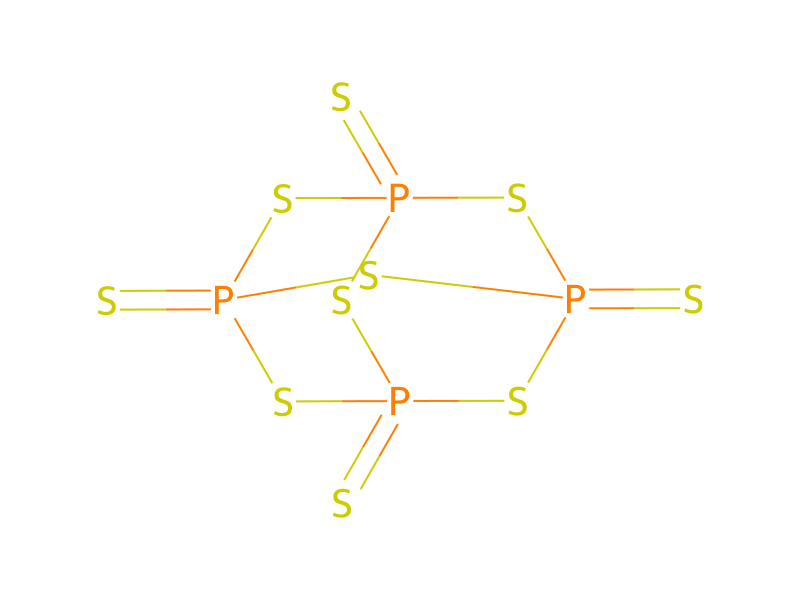
P12(SP3(SP(SP(S3)(S1)=S)(=S)S2)=S)=[S:2].C([O-])([O-])=O.[Na+].[Na+].[F:21][C:22]1[CH:23]=[C:24]([C@H:28]2[NH:33][C:32](=O)[CH2:31][O:30][CH2:29]2)[CH:25]=[CH:26][CH:27]=1>C1COCC1>[F:21][C:22]1[CH:23]=[C:24]([C@H:28]2[NH:33][C:32](=[S:2])[CH2:31][O:30][CH2:29]2)[CH:25]=[CH:26][CH:27]=1Participants
Reactant 3


Product 1

Reagents, catalysts & solvents 1

Procedure
To a stirred room temperature suspension of P4S10 (6.0 g, 13.4 mmol) and Na2CO3 (1.42 g, 13.4 mmol) in THF (40 mL) was slowly added a solution of (R)-5-(3-fluoro-phenyl)-morpholin-3-one (2.16 g, 11.1 mmol) in THF (30 mL). The mixture was stirred at room temperature for two hours, and then quenched by addition of 10% aqueous Na3PO4 (50 mL). The mixture was stirred another five minutes and then extracted with a 1:1: mixture of ethyl acetate and diethyl ether. The organic layer was separated, dried (MgSO4), filtered and concentrated under reduced pressure. The residue was chromatographed through silica gel using a 15-30% ethyl acetate/hexanes solvent gradient to give 1.84 g (78%) of (R)-5-(3-fluoro-phenyl)-morpholine-3-thione as a white solid, MP=124-125° C.
Workup
- customquenched by addition of 10% aqueous Na3PO4 (50 mL)
- stirringThe mixture was stirred another five minutes
- extractionextracted with a 1:1
- additionmixture of ethyl acetate and diethyl ether
- customThe organic layer was separated
- dry with materialdried (MgSO4)
- filtrationfiltered
- concentrationconcentrated under reduced pressure
- customThe residue was chromatographed through silica gel using a 15-30% ethyl acetate/hexanes solvent gradient
Sources & evidence
- ORD record
- ord-2309932ffda7495ab6ee7e5d0078197b
- Source dataset
- uspto-grants-2014_10
- Patent number
- US08871760B2
Reaction notes
Loading…