Hydrazine → HCID 178497404, compound
Reaction equation

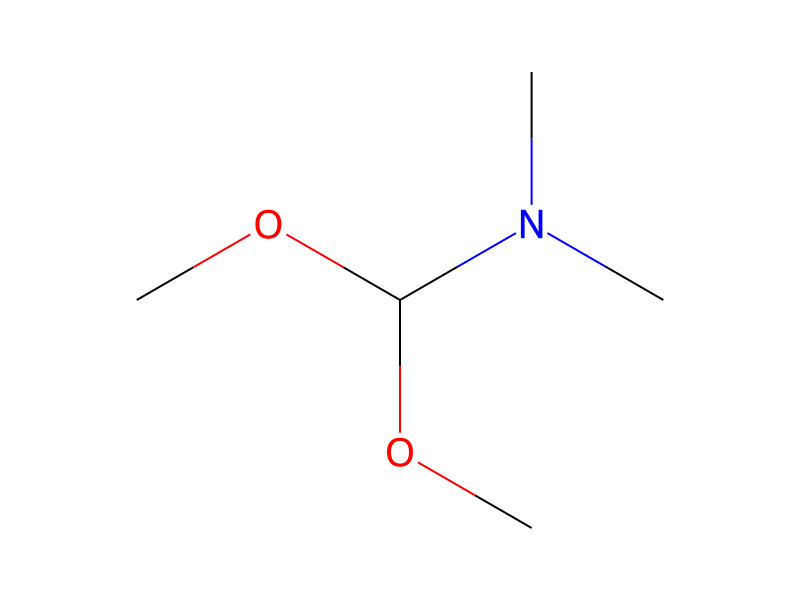
[C:1]([C:4]1[C:5]([CH:15]2[CH2:18][CH2:17][CH2:16]2)=[CH:6][C:7]([CH3:14])=[C:8]([CH:13]=1)[C:9]([O:11][CH3:12])=[O:10])(=O)[NH2:2].COC(OC)[N:22]([CH3:24])C.[NH2:27]N>C(O)(=O)C>[CH:15]1([C:5]2[C:4]([C:1]3[NH:22][CH:24]=[N:27][N:2]=3)=[CH:13][C:8]([C:9]([O:11][CH3:12])=[O:10])=[C:7]([CH3:14])[CH:6]=2)[CH2:18][CH2:17][CH2:16]1Participants
Reactant 3


Product 1

Reagents, catalysts & solvents 1

Conditions
- Temperature
- 80 °C
Procedure
To a vial was added methyl 5-carbamoyl-4-cyclobutyl-2-methylbenzoate (compound 202.1, 59 mg, 0.24 mmol, 1.0 equiv) and N,N-dimethylformamide dimethyl acetal (1 mL) was added. The mixture was heated at 80° C. for 5 hours then the solvents were removed in vacuo. To the residue was added acetic acid (400 μL) and a solution of anhydrous hydrazine (8.2 μL, 0.26 mmol, 1.1 equiv) in acetic acid (100.4). To the resulting thick suspension was added additional acetic acid (500 μL) and the mixture was stirred at 80° C. for 1.5 hours then the solvents removed in vacuo. Ethyl acetate (5 mL) and DCM (5 mL) was added (some undissolved solids). The organics was washed with saturated NaHCO3 (10 mL) and brine (5 mL) and removed in vacuo to obtain the title compound as a white solid (theoretical yield). m/z (ES+) 272 (M+H)+.
Workup
- additionwas added
- customthe solvents were removed in vacuo
- additionTo the residue was added acetic acid (400 μL)
- customthe solvents removed in vacuo
- additionEthyl acetate (5 mL) and DCM (5 mL) was added (some undissolved solids)
- washThe organics was washed with saturated NaHCO3 (10 mL) and brine (5 mL)
- customremoved in vacuo
Sources & evidence
- ORD record
- ord-c2211f7a48ce4039905be41a8d062787
- Source dataset
- uspto-grants-2014_10
- Patent number
- US08871790B2
Reaction notes
Loading…