Hydrochloric Acid → HCID 13576954, compound
Reaction equation

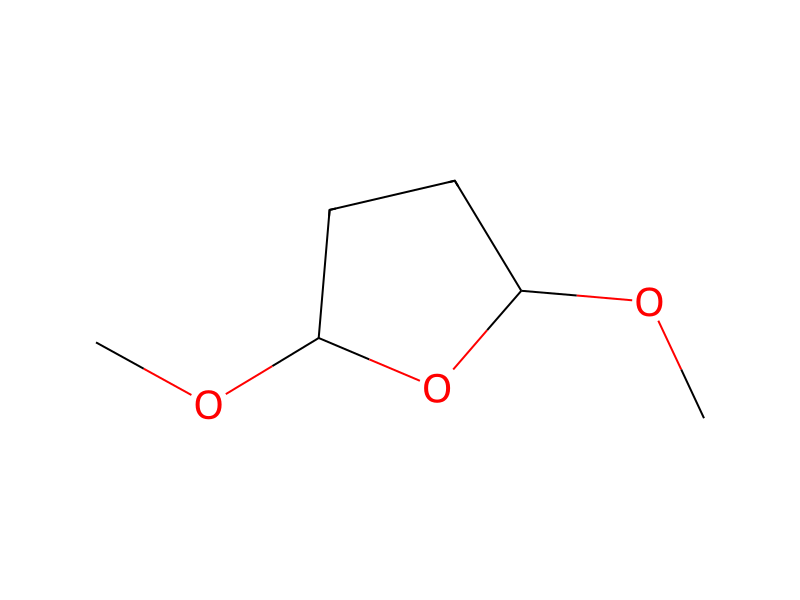
CO[CH:3]1[CH2:7][CH2:6][CH:5](OC)O1.Cl.[NH2:11][C:12]1[C:22]([Cl:23])=[CH:21][C:15]2[CH:16]([CH3:20])[C:17](=[O:19])[O:18][C:14]=2[CH:13]=1>O1CCOCC1>[Cl:23][C:22]1[C:12]([N:11]2[CH:3]=[CH:7][CH:6]=[CH:5]2)=[CH:13][C:14]2[O:18][C:17](=[O:19])[CH:16]([CH3:20])[C:15]=2[CH:21]=1Participants
5
Reactant 3


Product 1

Reagents, catalysts & solvents 1

Procedure
7 ml (0.045 mole) of 2,5-dimethoxytetrahydrofuran and 5 ml of 5 N HCl are added to a solution of 6.7 g (0.035 mole) of 6-amino-5-chloro-3-methylbenzofuran-2(3H)-one in 100 ml of dioxane. After 1 hour, the aqueous phase that has formed is removed and the upper dioxane-containing phase is concentrated to dryness by evaporation in vacuo. The dark-brown residue is filtered with methylene chloride through silica gel. After evaporating the methylene chloride, 5-chloro-3-methyl-6-(pyrrol-1-yl)-benzofuran-2(3H)-one is obtained in the form of colourless prisms having a melting point of 100°-101°.
Workup
- customthe aqueous phase that has formed
- customis removed
- additionthe upper dioxane-containing phase
- concentrationis concentrated to dryness by evaporation in vacuo
- filtrationThe dark-brown residue is filtered with methylene chloride through silica gel
- customAfter evaporating the methylene chloride
Sources & evidence
- ORD record
- ord-a2d2cdb0a4984912beb63b546f13eb78
- Source dataset
- uspto-grants-1984_05
- Patent number
- US04451462
Reaction notes
Loading…