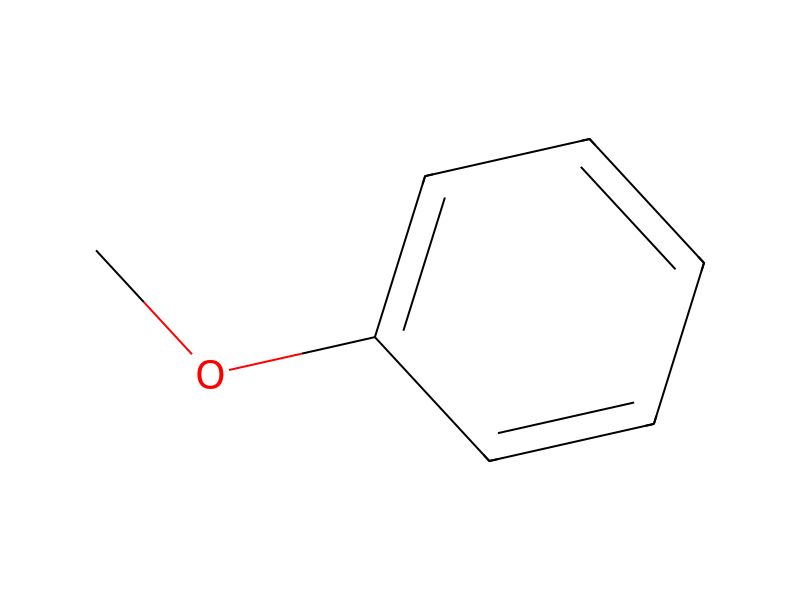
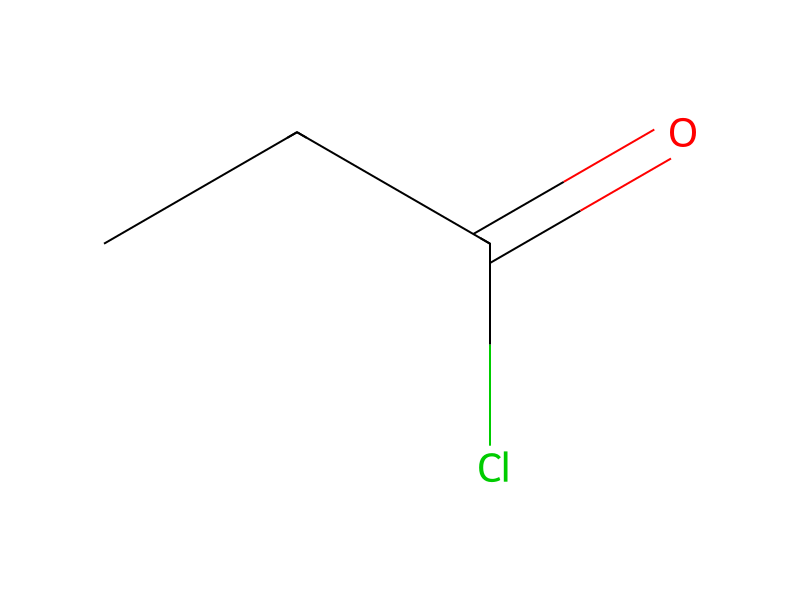
Anisole → 4-Propanoylanisole
Reaction equation

[C:1](Cl)(=[O:4])[CH2:2][CH3:3].[CH3:6][O:7][C:8]1[CH:13]=[CH:12][CH:11]=[CH:10][CH:9]=1>ClCCl.[Al+3].[Cl-].[Cl-].[Cl-]>[CH3:6][O:7][C:8]1[CH:13]=[CH:12][C:11]([C:1](=[O:4])[CH2:2][CH3:3])=[CH:10][CH:9]=1Participants
Reactant 2
Product 1

Reagents, catalysts & solvents 2


Procedure
A procedure similar to step 2 of Example 47 was used. Propionyl chloride prepared in the step 1 and methylphenyl ether were used as starting materials, allowed to react in dichloromethane with AlCl3 as catalyst, stirred at −5° C. to −10° C. for 30 minutes and then at room temperature for 1 hour, a crude product was obtained, purified under a reduced pressure by silica gel column chromatography eluted with petroleum ether and ethyl acetate at a ratio of 25:1 (V:V) to obtain a product of colorless liquid in a yield of 71.8%, 1H-NMR (CDCl3, 400 MHz) δ: 1.22 (3H, t, J=7.00 Hz, CH2CH3), 2.96 (2H, q, J=7.00 Hz, CH2CH3), 3.87 (3H, s, OCH3), 6.93 (2H, d, J=8.72 Hz, ArH), 7.95 (2H, d, J=8.72 Hz, ArH); ESI-MS: 187.2 (M+Na, 20), 165.2 (M+1, 100).
Workup
- waitat room temperature for 1 hour
Sources & evidence
- ORD record
- ord-73efb7bb8bf54a359acaa546c43ddc64
- Source dataset
- uspto-grants-2011_11
- Patent number
- US08053581B2
Reaction notes
Loading…