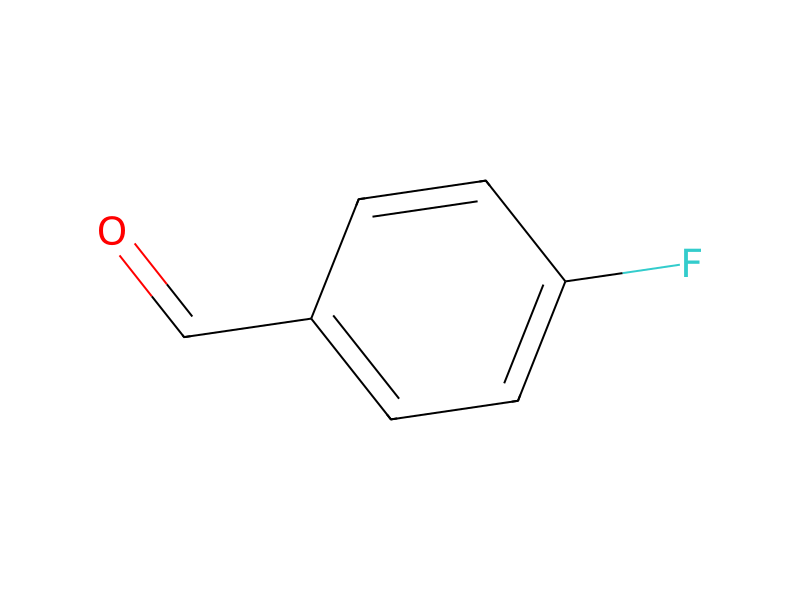
4-Fluorobenzaldehyde → HCID 178434624, compound
Reaction equation

C(O[BH-](OC(=O)C)OC(=O)C)(=O)C.[Na+].Br.[Cl:16][C:17]1[CH:18]=[C:19]([CH:29]=[C:30]([Cl:32])[CH:31]=1)[O:20][C:21]1[C:22]([CH3:28])=[N:23][NH:24][C:25]=1[CH2:26][NH2:27].[F:33][C:34]1[CH:41]=[CH:40][C:37]([CH:38]=O)=[CH:36][CH:35]=1>C(O)(=O)C.ClCCl>[Cl:16][C:17]1[CH:18]=[C:19]([CH:29]=[C:30]([Cl:32])[CH:31]=1)[O:20][C:21]1[C:22]([CH3:28])=[N:23][NH:24][C:25]=1[CH2:26][NH:27][CH2:38][C:37]1[CH:40]=[CH:41][C:34]([F:33])=[CH:35][CH:36]=1Participants
6





Procedure
Sodium triacetoxyborohydride (36 mg, 0.160 mmol) was added in one portion to a stirred solution of the pyrazole of Example 109 (150 mg, 0.400 mmol), 4-fluorobenzaldehyde (11 mg, 0.080 mmol) and acetic acid (3 drops) in dichloromethane (15 ml) at room temperature under nitrogen. The reaction was stirred for 3 hours and then concentrated under reduced pressure. The crude product was purified by flash chromatography on silica gel eluting with dichloromethane:methanol:ammonia (90:9:1, by volume) to provide the title compound (6 mg) as a colourless oil.
Workup
- concentrationconcentrated under reduced pressure
- customThe crude product was purified by flash chromatography on silica gel eluting with dichloromethane:methanol:ammonia (90:9:1, by volume)
Sources & evidence
- ORD record
- ord-f15f9c43770143eaaaaa5ffcc4304bb3
- Source dataset
- uspto-grants-2011_11
- Patent number
- US08063044B2
Reaction notes
Loading…