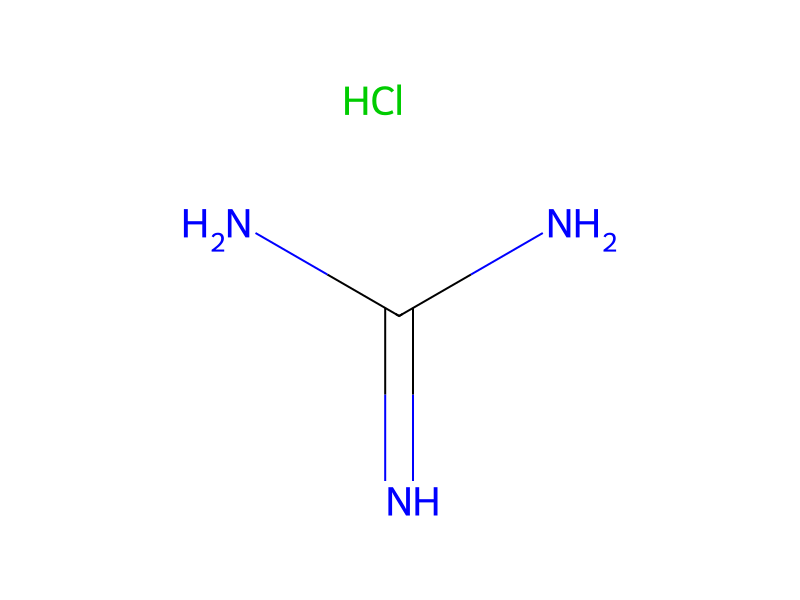
Guanidine Hydrochloride → HCID 178512388, compound
Reaction equation

O1CCCCC1OCC[N:10]1[C:18]2[C:13](=[CH:14][CH:15]=[CH:16][CH:17]=2)[CH:12]=[C:11]1[C:19]([O:21]C)=O.Cl.[NH2:24][C:25]([NH2:27])=[NH:26].[CH3:28][O-:29].[Na+]>CO>[O:29]1[CH2:15][CH2:14][CH2:13][CH2:12][CH:28]1[O:21][CH2:19][CH2:11][NH:26][C:25]([NH2:27])=[N:24][C:19]([C:11]1[NH:10][C:18]2[C:13]([CH:12]=1)=[CH:14][CH:15]=[CH:16][CH:17]=2)=[O:21]Participants
Reactant 3


Product 1

Reagents, catalysts & solvents 1

Procedure
The reaction was carried out in a manner similar to Example 1 except for using 1.00 g (3.30 mmol) of methyl 1-[2-(2-tetrahydropyranyl)oxyethyl]-2-indolecarboxylate, 3.15 g (33.0 mmol) of guanidine hydrochloride and a methanol solution of 1.78 g (33.0 mmol) of sodium methoxide. 1-[2-(2-Tetrahydropyranyl)oxyethyl]-2-indoloylguanidine was obtained in an amount of 0.85 g. Thereafter 0.69 g of the thus obtained compound was dissolved in hydrochloric acid/methanol. The solution was stirred at room temperature for 5.5 hours. The reaction mixture was concentrated under reduced pressure and a solvent mixture of methanol and diethyl ether was added to the resulting residue. The precipitates formed were filtered and dried under reduced pressure to give 0.49 g (65%) of 1-(2-hydroxyethyl)-2-indoloylguanidine hydrochloride.
Sources & evidence
- ORD record
- ord-1dbf865d34a4418181d4d096321835b0
- Source dataset
- uspto-grants-2001_01
- Patent number
- US06169107A
Reaction notes
Loading…