Dicyclohexylcarbodiimide → 1-Decanol
Reaction equation
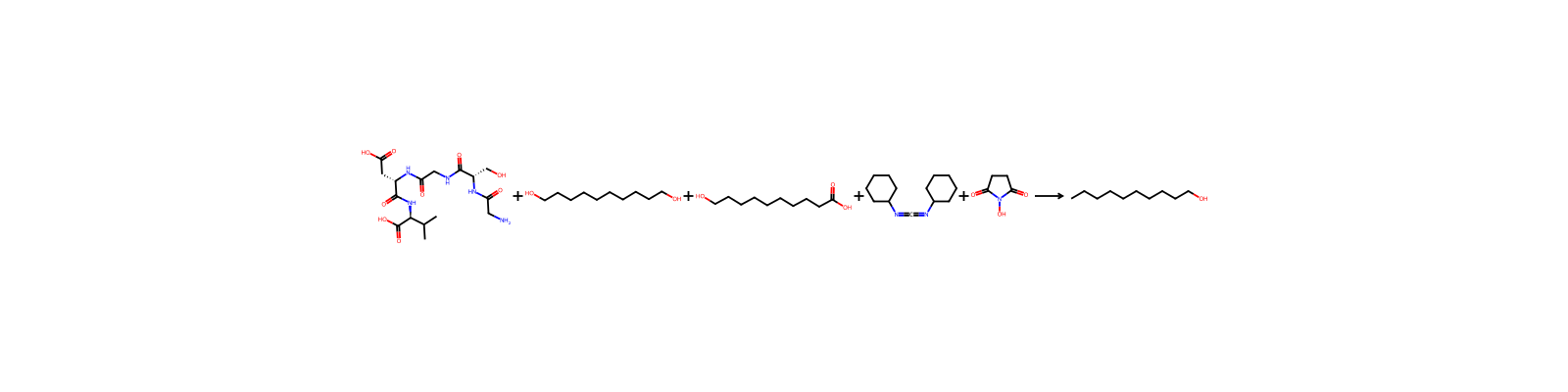
NCC(N[C@H](C(NCC(N[C@H](C(N[C@H](C(O)=O)C(C)C)=O)CC(=O)O)=O)=O)CO)=O.[CH2:31](O)[CH2:32][CH2:33][CH2:34][CH2:35][CH2:36][CH2:37][CH2:38][CH2:39][CH2:40][OH:41].OCCCCCCCCCC(O)=O.C1(N=C=NC2CCCCC2)CCCCC1.ON1C(=O)CCC1=O>>[CH2:40]([OH:41])[CH2:39][CH2:38][CH2:37][CH2:36][CH2:35][CH2:34][CH2:33][CH2:32][CH3:31]Participants
6

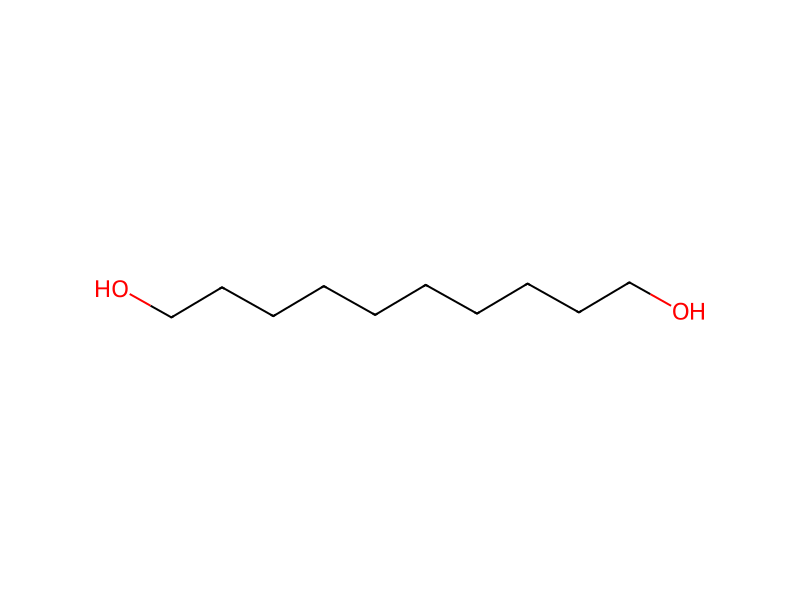


Procedure
Coupling of glycylserylglycylaspartylvaline with 1,10-decanediol. The protected peptide is reacted with 10-hydroxydecanoic acid (Aldrich) in the presence of dicyclohexylcarbodiimide (DCC) (Aldrich) and N-hydroxy-succinimide (Aldrich) according to Bergeron et al. (1981) J. Org. Chem. 46:4524, until the complete consumption of the peptide starting material is confirmed by thin layer chromatography. Flash column purification gives 10-(peptidyloxy) decanol as product, through formation of an amide linkage.
Workup
- custom46:4524, until the complete consumption of the peptide starting material
- customFlash column purification
Sources & evidence
- ORD record
- ord-90ae0101f6e74a0383a29df67f6e8c24
- Source dataset
- uspto-grants-2001_01
- Patent number
- US06171614B2
Reaction notes
Loading…