1-Butanol → Butyl Acrylate
Reaction equation

[CH2:1]([OH:5])[CH2:2][CH2:3][CH3:4].[C:6](O)(=[O:9])[CH:7]=[CH2:8].CS(O)(=O)=O>O>[C:6]([O:5][CH2:1][CH2:2][CH2:3][CH3:4])(=[O:9])[CH:7]=[CH2:8]Participants
Reactant 3

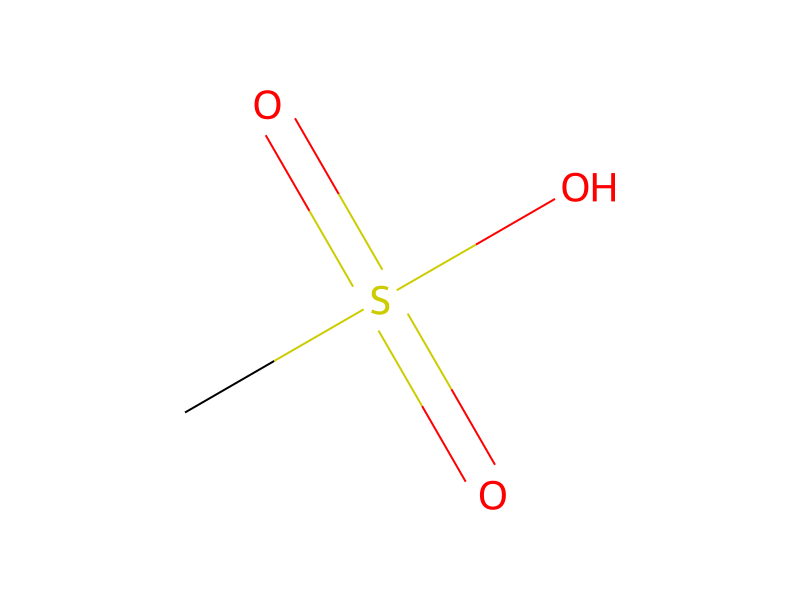

Product 1
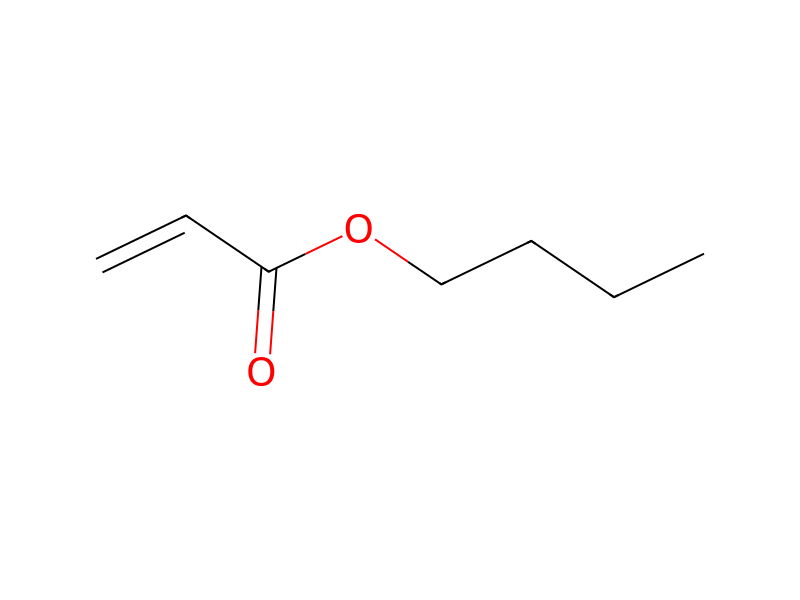
Reagents, catalysts & solvents 1

Procedure
Into reaction vessel 1 are fed n-butanol (BuOH), acrylic acid (HAcA) and an acid esterification catalyst such as methanesulfonic acid (MSA) through lines 2, 4, and 5 respectively. A polymerization inhibitor is also typically employed throughout the process, and added at appropriate locations and concentrations. Those of skill in the art will recognize appropriate locations and concentrations to utilize. Conditions of temperature and pressure are maintained in reaction vessel 1 to cause a reaction of HAcA with BuOH present in some excess to form n-butyl acrylate (BuAcA) and water, and small amounts of various by-products such as light ends including n-butyl acetate (BuAc) and di-n-butyl ether (DBE) and heavy ends such as low molecular weight polymers of HAcA and BuAcA. Vapors of the more volatile compounds present including BuOH, BuAcA, water and light ends rise into the fractionization zone situated immediately above the reaction zone of reaction vessel 1. These vapors are forwarded through line 6 into condenser 8 from which the liquid condensate flows through 9 into separator 10 where the condensate is separated into immiscible substantially organic phase 11 and aqueous phase 12. The organic phase condensate containing predominately BuAcA is fed through line 14 to finishing tower 15 from which high purity finished BuAcA is withdrawn as a sidestream through line 18. The overhead vapors from tower 15 containing significant amount of BuOH and BuAcA and lesser amounts of water and light ends, are fed through line 19 to condenser 20, and the residue from tower 15 containing primarily BuAcA is recycled through line 21 to reaction vessel 1. The diagram indicates stream 21 forwarded to the base of vessel 1. Those of skill in the art will appreciate that this stream may be forwarded to any location in vessel 1 as appropriate. Most of the condensate from condenser 20 is recycled through line 22 to reaction vessel 1. However, a minor portion of the condensate is purged and fed through line 24, to purge recovery tower 25. The overhead vapors from purge recovery tower 25 containing significant amounts of BuOH, water, and light ends are fed through line 28 to condenser 29. The residue of tower 25 containing significant amounts of BuAcA and BuOH and largely stripped of light ends is recycled through line 30 to reaction vessel 1. The condensate from condenser 29 is fed through line 31 to separator 32 where it separates into organic and aqueous phases. A part of the organic phase is recycled through line 34 to purge recovery tower 25 as reflux while the remainder is withdrawn through line 35 and discarded, with the entire aqueous phase also being discarded through line 38. The foregoing discarding of a portion of the organic and the entire aqueous phase from separator 32 act to keep the light ends of the overall system in balance.
Workup
- customInto reaction vessel 1
- additionadded at appropriate locations and concentrations
- concentrationlocations and concentrations
- temperatureConditions of temperature and pressure are maintained in reaction vessel 1
- customa reaction of HAcA with BuOH present in some excess
Sources & evidence
- ORD record
- ord-def6287efd574b0b897304f8f811e42b
- Source dataset
- uspto-grants-2001_01
- Patent number
- US06172258B2
Reaction notes
Loading…