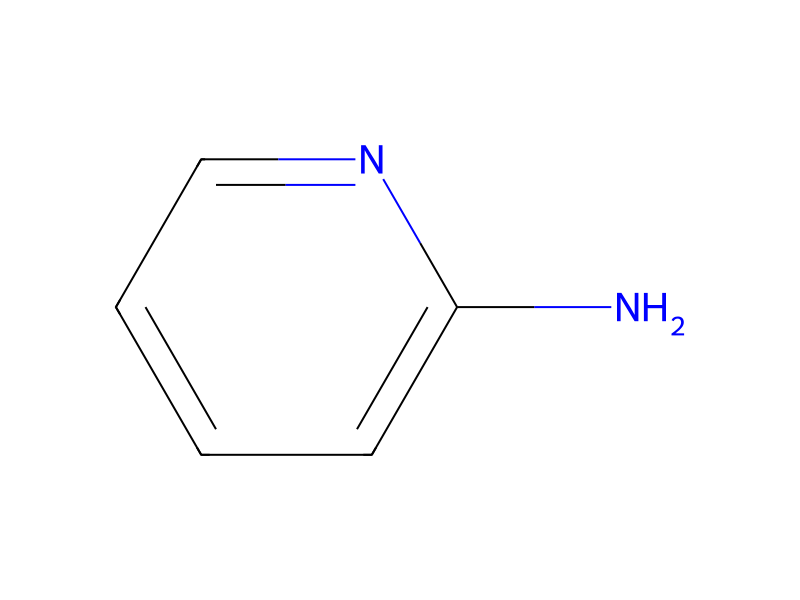
2-Aminopyridine → HCID 21265805, compound
Reaction equation

Br[CH:2]([CH3:19])[C:3](=O)[CH2:4][C:5]([O:7][CH2:8][C:9]1[CH:14]=[CH:13][C:12]([N+:15]([O-:17])=[O:16])=[CH:11][CH:10]=1)=[O:6].[NH2:20][C:21]1[CH:26]=[CH:25][CH:24]=[CH:23][N:22]=1.C(=O)([O-])O.[Na+]>COCCOC>[CH3:19][C:2]1[N:22]2[CH:23]=[CH:24][CH:25]=[CH:26][C:21]2=[N:20][C:3]=1[CH2:4][C:5]([O:7][CH2:8][C:9]1[CH:14]=[CH:13][C:12]([N+:15]([O-:17])=[O:16])=[CH:11][CH:10]=1)=[O:6]Participants
5
Reactant 3


Product 1

Reagents, catalysts & solvents 1

Procedure
4-Nitrobenzyl 4-bromo-3-oxopentanoate (1.02 g) and 2-aminopyridine (436 mg) were dissolved in 1,2-dimethoxyethane (20 ml). The solution was heated for 15 hours under reflux. The reaction mixture was concentrated, to which were added 1N HCl (10 ml) and ethyl acetate (10 ml). The mixture was shaken and left standing to form two layers. To the aqueous layer was added sodium hydrogencarbonate to adjust its pH to 7, followed by extraction with ethyl acetate. The extract was dried over anhydrous magnesium sulfate, which was concentrated under reduced pressure. The concentrate was purified by means of a column chromatography (carrier: silica gel, 30 g, developing: ethyl acetate) to afford the title compound (0.27 g).
Workup
- temperatureThe solution was heated for 15 hours
- temperatureunder reflux
- concentrationThe reaction mixture was concentrated, to which
- additionwere added 1N HCl (10 ml) and ethyl acetate (10 ml)
- waitleft
- customto form two layers
- extractionfollowed by extraction with ethyl acetate
- dry with materialThe extract was dried over anhydrous magnesium sulfate, which
- concentrationwas concentrated under reduced pressure
- customThe concentrate was purified by means of a column chromatography (carrier: silica gel, 30 g, developing: ethyl acetate)
Sources & evidence
- ORD record
- ord-850ab57f328641c18d7cc17303b27973
- Source dataset
- uspto-grants-2001_01
- Patent number
- US06174877B1
Reaction notes
Loading…