Methyl dichloroacetate → 10-Tetradecene-14-olide
Reaction equation

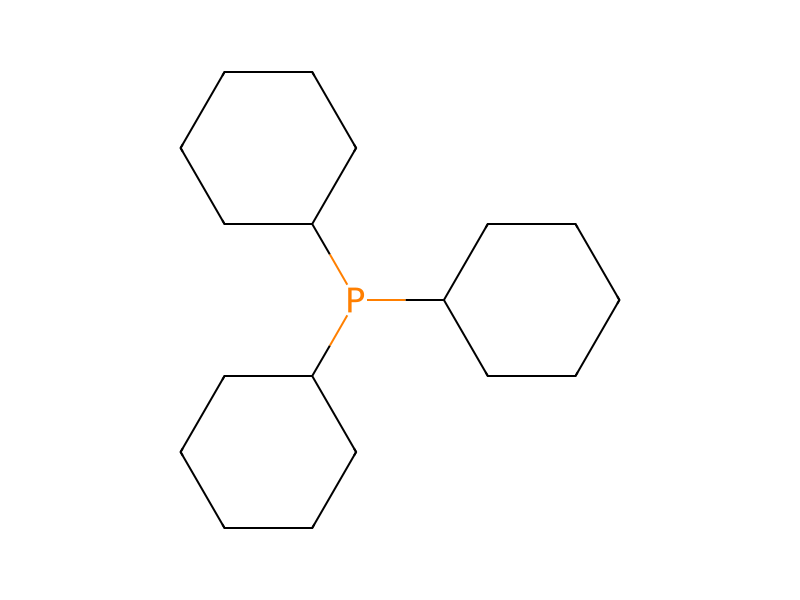
C1(P(C2CCCCC2)C2CCCCC2)CCCCC1.[Al].[C:21]([O:33][CH2:34][CH2:35][CH2:36][CH:37]=[CH2:38])(=[O:32])[CH2:22][CH2:23][CH2:24][CH2:25][CH2:26][CH2:27][CH2:28][CH2:29]C=C.ClC(Cl)C(OC)=O>C1(C)C=CC=CC=1>[C:21]1(=[O:32])[O:33][CH2:34][CH2:35][CH2:36][CH:37]=[CH:38][CH2:29][CH2:28][CH2:27][CH2:26][CH2:25][CH2:24][CH2:23][CH2:22]1Participants
6
Reactant 4



Product 1

Reagents, catalysts & solvents 1

Conditions
- Temperature
- 80 °C
Procedure
0.05 g of tricyclohexylphosphine, 0.06 g (0.1 mmol) of di-μ-chlorobis ((p-cymene)chlororuthenium), 10 ml of toluene, 0.05 g (1.85 mmol) of an aluminum powder, 0.252 g (1 mmol) of 4-pentenyl 10-undecenoate and 0.021 ml (0.2 mmol) of methyl dichloroacetate were blended and the mixture was stirred at 80° C. for 16 hours in a nitrogen stream. A solvent was distilled and the residue was refined by silica gel column chromatography (toluene/ethyl acetate=10/1) to obtain 0.09 g of an object material (yield: 40%). The result of 1H-NMR of the above reaction solution is as follows:
Workup
- distillationA solvent was distilled
Sources & evidence
- ORD record
- ord-79e1f4962b8e4d8399fd9541e49e144c
- Source dataset
- uspto-grants-2001_01
- Patent number
- US06175047B1
Reaction notes
Loading…