1,3-Propanediol → 4-(1,3-Dioxan-2-yl)-2-nitrophenol
Reaction equation

[OH:1][C:2]1[CH:9]=[CH:8][C:5]([CH:6]=[O:7])=[CH:4][C:3]=1[N+:10]([O-:12])=[O:11].[CH2:13](O)[CH2:14][CH2:15][OH:16]>C1(C)C=CC=CC=1.C1(C)C=CC(S(O)(=O)=O)=CC=1>[OH:1][C:2]1[CH:9]=[CH:8][C:5]([CH:6]2[O:16][CH2:15][CH2:14][CH2:13][O:7]2)=[CH:4][C:3]=1[N+:10]([O-:12])=[O:11]Participants
5
Reactant 2
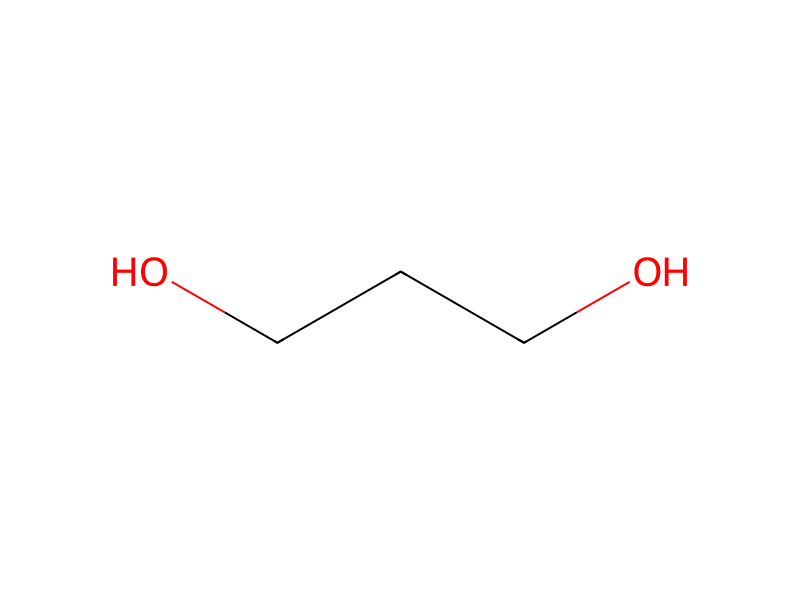

Product 1

Reagents, catalysts & solvents 2


Procedure
A mixture of 4-hydroxy-3-nitro-benzaldehyde (5.0 g, 29.9 mmol), 1,3-propanediol (3.4 g, 44.9 mmol) and 0.1 g of p-toluene sulfonic acid in 100 mL of toluene is warmed to reflux. The water generated is removed by a Dean-Stark trap. After 2 hours, the reaction mixture is cooled to room temperature and extracted with 2×100 mL of saturated sodium bicarbonate followed by 100 mL of brine. Drying over sodium sulfate and evaporation of the solvent gives 5.6 g (83% yield) of 2-[4-hydroxy-3-nitro-phenyl]-1,3-dioxane oil.
Workup
- temperatureis warmed to reflux
- customThe water generated is removed by a Dean-Stark trap
- extractionextracted with 2×100 mL of saturated sodium bicarbonate
- dry with materialDrying over sodium sulfate and evaporation of the solvent
Sources & evidence
- ORD record
- ord-8a2ca6a1503d4b639f9e9bc2dee2aac8
- Source dataset
- uspto-grants-2001_01
- Patent number
- US06177422B1
Reaction notes
Loading…