2-Thiophenecarboxaldehyde → 2,5-Di(thiophen-2-yl)-1H-pyrrole
Reaction equation

[S:1]1[CH:5]=[CH:4][CH:3]=[C:2]1[CH:6]=O.[C-]#[N:9].[Na+].CN(C)[CH2:13][C:14](=O)[CH2:15][C:16]1[S:17][CH:18]=[CH:19][CH:20]=1>CN(C=O)C>[S:1]1[CH:5]=[CH:4][CH:3]=[C:2]1[C:6]1[NH:9][C:15]([C:16]2[S:17][CH:18]=[CH:19][CH:20]=2)=[CH:14][CH:13]=1Participants




Procedure
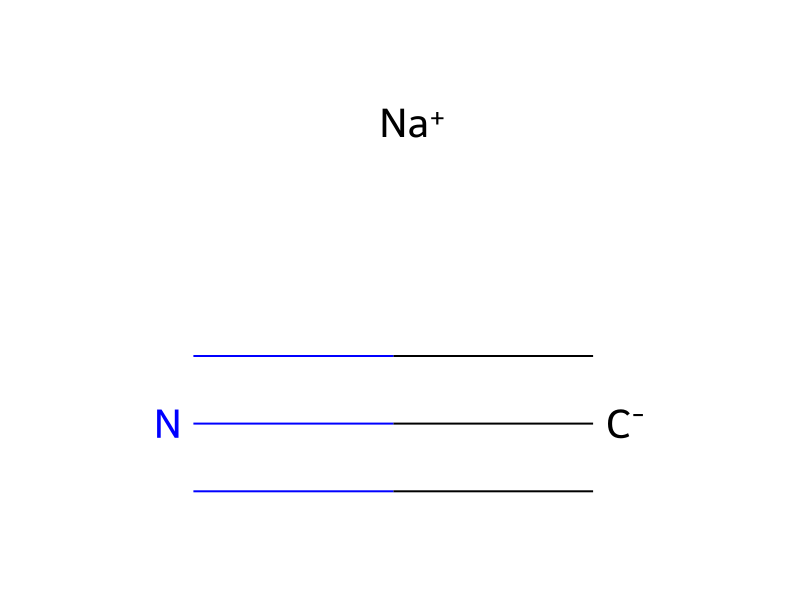
A solution of 2-thiophene carboxaldehyde (6) in DMF is added under nitrogen to a suspension of sodium cyanide in DMF. The mixture is stirred and the 3-dimethylamino-1-(2-thienyl)-propanone (5) is added slowly. The mixture is allowed to stand overnight and the 1,4-Di-(2-thienyl)-1,4-butanedione product (7) is extracted with dichloromethane in 64% yield. 2,5,-Di-(2-thienyl)-pyrrole (DTP) can be produced in 80% yield by refluxing (7) for 12 hours with ammonium acetate in a mixture of acetic acid and acetic anhydride. The acid acts as a catalyst and the anhydride as a water scavenger which drives the equilibrium reaction towards the desired product. An N-substituted derivative of 2,5-DTP (9) may be produced by using an appropriate primary amine instead of ammonium acetate. The yield of (9) is often comparable to that of 2,5-DTP but does exhibit some dependence on the substituent group R; in particular, if R is bulky the yield may decrease substantially. Where appropriate, yields may be improved by the use of a benzene/acetic acid solvent system thus allowing the azeotropic removal of water from the reaction mixture by attaching a Dean-Stark trap. Alternatively, a stronger acid catalyst such as titanium (IV) chloride can be used.
Workup
- extractionthe 1,4-Di-(2-thienyl)-1,4-butanedione product (7) is extracted with dichloromethane in 64% yield
Sources & evidence
- ORD record
- ord-09e33bedfae04c2d9689cf61396c5528
- Source dataset
- uspto-grants-2001_01
- Patent number
- US06180064B2
Reaction notes
Loading…