Hydrochloric Acid → 3-(4-Pyridyl)-2-(4-fluorophenyl)-4,7-diaza-indole
Reaction equation

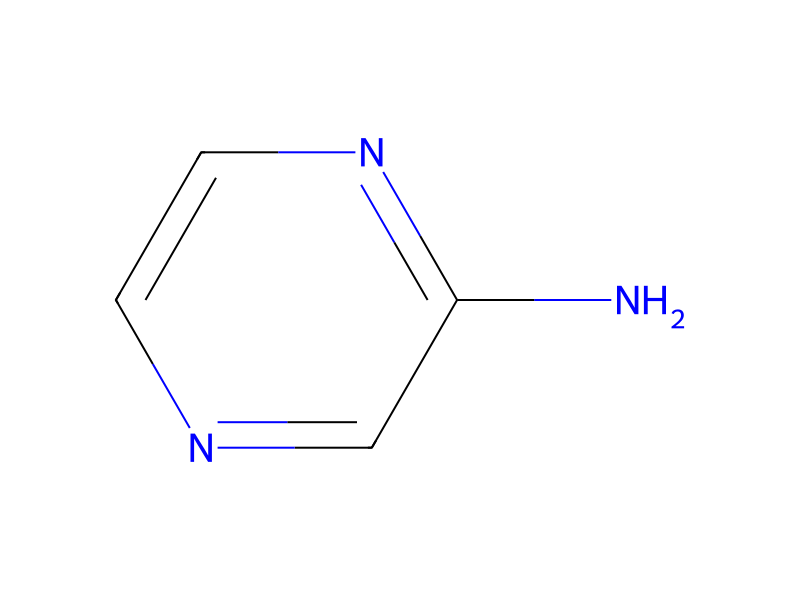
[F:1][C:2]1[CH:7]=[CH:6][C:5]([C:8](=O)[CH:9](O[Si](C(C)(C)C)(C)C)[C:10]2[CH:15]=[CH:14][N:13]=[CH:12][CH:11]=2)=[CH:4][CH:3]=1.[NH2:25][C:26]1[CH:31]=[N:30][CH:29]=[CH:28][N:27]=1.Cl>O>[N:13]1[CH:12]=[CH:11][C:10]([C:9]2[C:31]3[C:26](=[N:27][CH:28]=[CH:29][N:30]=3)[NH:25][C:8]=2[C:5]2[CH:4]=[CH:3][C:2]([F:1])=[CH:7][CH:6]=2)=[CH:15][CH:14]=1Participants
5
Reactant 3


Product 1

Reagents, catalysts & solvents 1

Conditions
- Temperature
- 23 °C
Procedure
1-(4-Fluorophenyl)-2-t-butyldimethylsiloxy-2-(4-pyridyl) ethanone (16) (5.44 g, 15.77 mmol), 2-aminopyrazine (1.00 g, 10.5 mmol), and concentrated HCl (30 mL) were heated in a sealed tube to 190° C. behind an explosion shield. After 3 h at 190° C., the reaction was allowed to cool to 23° C. then diluted with water (100 mL). After further dilution with concentrated ammonium hydroxide to pH of 12, the reaction was extracted with methylene chloride (3×200 mL), and dried (MgSO4). After concentration in vacuo, the residue was purified by applying flash chromatography (100% ethyl acetate) to afford 3-(4-pyridyl)-2-(4-fluorophenyl)-4,7-diaza-indole (62): Mass Spectrum (CI) 291 (MH+).
Workup
- extractionAfter further dilution with concentrated ammonium hydroxide to pH of 12, the reaction was extracted with methylene chloride (3×200 mL)
- dry with materialdried (MgSO4)
- concentrationAfter concentration in vacuo
- customthe residue was purified
Sources & evidence
- ORD record
- ord-5d5e05f8dece462fb3452c314609db7b
- Source dataset
- uspto-grants-2001_01
- Patent number
- US06180643B2
Reaction notes
Loading…