1,2-Bis(chloromethyl)benzene → 1,2-Bis(chloromethyl)benzene
Reaction equation

[Cl:1][CH2:2][C:3]1[C:4]([CH2:9][Cl:10])=[CH:5][CH:6]=[CH:7][CH:8]=1.[CH2:11]([CH:13]([CH2:17][CH2:18][CH2:19][CH3:20])[C:14]([O-:16])=[O:15])[CH3:12].[Na+]>CN(C)C=O>[Cl:1][CH2:2][C:3]1[C:4]([CH2:9][Cl:10])=[CH:5][CH:6]=[CH:7][CH:8]=1.[CH2:11]([CH:13]([CH2:17][CH2:18][CH2:19][CH3:20])[C:14]([O:16][CH2:2][C:3]1[CH:8]=[CH:7][CH:6]=[CH:5][C:4]=1[CH2:9][Cl:10])=[O:15])[CH3:12]Participants
5
Reactant 2

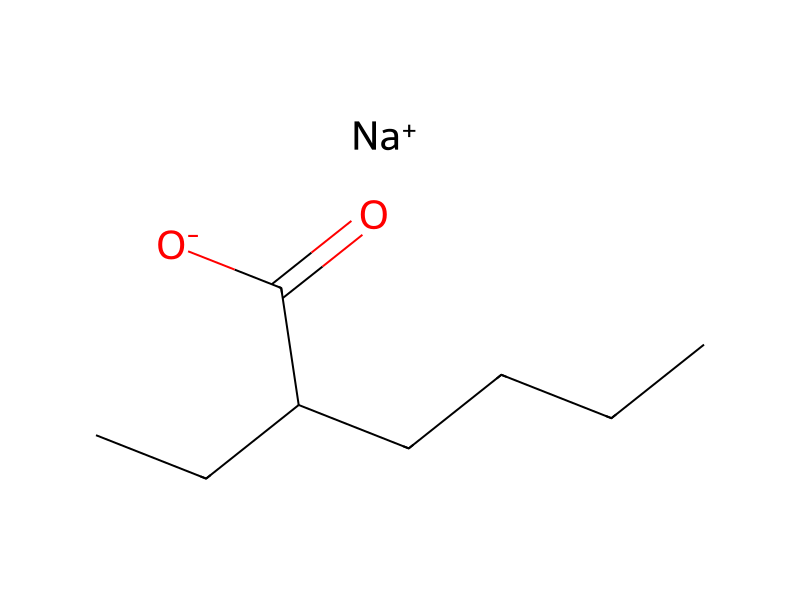
Product 2

Reagents, catalysts & solvents 1

Conditions
- Temperature
- 120 °C
Procedure
To a glass-made three-necked flask (volume: 100 ml) with a condenser, 8.8 g (50 mmol) of α,α′-dichloro-o-xylene, 4.0 g of N,N-dimethylformamide and 2.1 g (12.5 mmol) of sodium 2-ethylhexanoate were added. After the mixture was heated and stirred at 120° C. for one hour, the reaction mixture was analyzed by the gas chromatography. The conversion of α,α′-dichloro-o-xylene, the yield of [2-(chloromethyl)phenyl]methyl 2-ethylhexanoate (based on sodium 2-ethylhexanoate), and the molar ratio of the [2-(chloromethyl)phenyl]methyl 2-ethylhexanoate produced to the diester compound as a by-product are shown in Table 1 below.
Workup
- temperatureAfter the mixture was heated
Sources & evidence
- ORD record
- ord-3e983a6643c2406e8746bc5b3433fffe
- Source dataset
- uspto-grants-2001_01
- Patent number
- US06180801B2
Reaction notes
Loading…