Potassium Carbonate → HCID 86742013, compound
Reaction equation

[OH:1][C:2]1[CH:7]=[CH:6][CH:5]=[CH:4][C:3]=1[C:8]1[C:12]2[S:13][CH:14]=[CH:15][C:11]=2[O:10][N:9]=1.C(C1[O:20][CH2:19]1)Br.C(=O)([O-])[O-].[K+].[K+]>C(#N)C>[O:1]1[C:7]2[C:2]1=[C:3]([C:8]1[C:12]3[S:13][CH:14]=[CH:15][C:11]=3[O:10][N:9]=1)[CH:4]=[CH:5][C:6]=2[O:20][CH3:19]Participants
5
Reactant 3

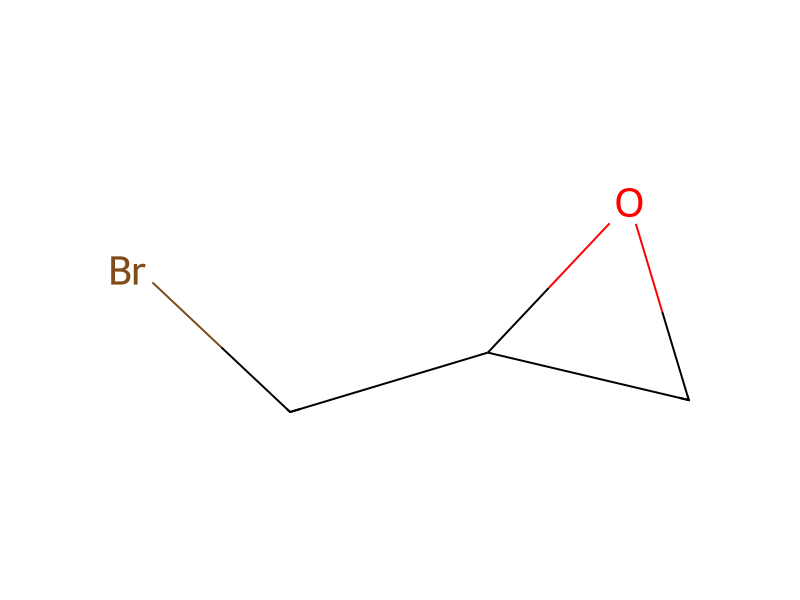

Product 1

Reagents, catalysts & solvents 1

Procedure
A mixture of 6.3 g of 3-(2-hydroxyphenyl)thieno[2,3-d]isoxazole, 5 g of epibromohydrin and 2.6 g of potassium carbonate in 37 ml of acetonitrile was stirred under nitrogen at 70°-80° C. until completion of the reaction. The reaction was complete fter 28 hours and the mixture was left to cool to room temperature. Quenching with water, extraction with ether/ethyl acetate (1:1), washing and drying (over anhydrous magnesium sulfate) gave 6.34 g of a crude oil. The epoxide was separated by high performance liquid chromatography (HPLC hereafter) using ethyl acetate/hexane (2:1) as an eluent, yielding 5.22 g of crystal This was recrystallized from ether/hexane, m.p. 65°-67° C.
Workup
- waitthe mixture was left
- customQuenching with water, extraction with ether/ethyl acetate (1:1)
- washwashing
- dry with materialdrying (over anhydrous magnesium sulfate)
- customgave 6.34 g of a crude oil
- customThe epoxide was separated by high performance liquid chromatography (HPLC hereafter)
Sources & evidence
- ORD record
- ord-92e97dfb6a014c25aa89dd4a19d0781a
- Source dataset
- uspto-grants-1988_03
- Patent number
- US04728651
Reaction notes
Loading…