Allyl bromide → HCID 20148438, compound
Reaction equation

[NH2:1][C:2]1[CH:3]=[C:4]2[C:12](=[CH:13][CH:14]=1)[NH:11][C:10]1[CH:9]=[N:8][CH:7]=[CH:6][C:5]2=1.[CH2:15](Br)[CH:16]=[CH2:17].[C:19]1([C:30]2CCCCCCCCCC=2)[CH2:29]CCCCCCCNN=1>C(O)C>[CH2:15]([N:1]([CH2:30][CH:19]=[CH2:29])[C:2]1[CH:3]=[C:4]2[C:12](=[CH:13][CH:14]=1)[NH:11][C:10]1[CH:9]=[N:8][CH:7]=[CH:6][C:5]2=1)[CH:16]=[CH2:17]Participants
5
Reactant 3


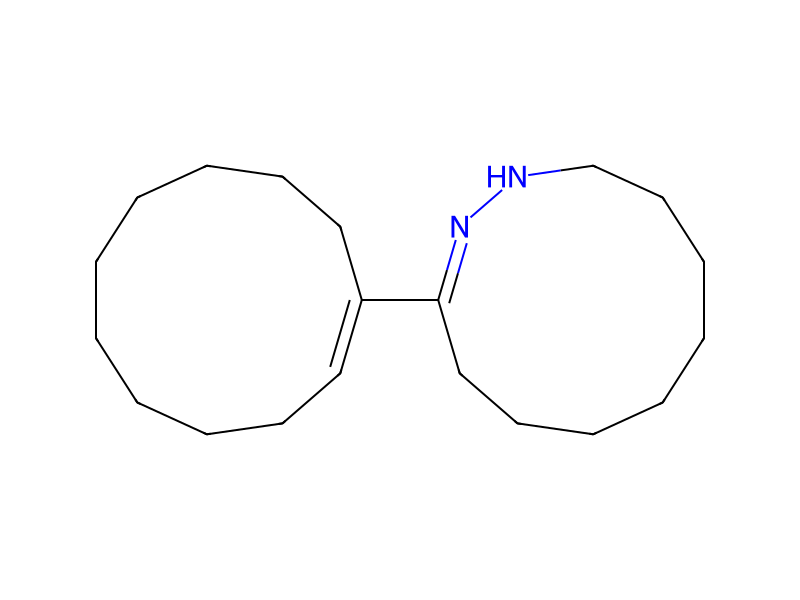
Product 1

Reagents, catalysts & solvents 1

Procedure
360 mg of 6-amino-β-carboline are heated in 20 ml of ethanol with 0.54 ml of allylbromide and 0.74 ml diazabicycloundecene for 3 hours at 70° C. After concentration to dryness and dispersing in ethyl acetate/saturated sodium chloride solution, the organic phase is separated, dried, filtered and concentrated. The residue is chromatographed on silica gel with cyclohexane/ethyl acetate=1:1 as eluant and 50 mg of 6-diallylamino-β-carboline as oil are obtained.
Workup
- concentrationAfter concentration to dryness
- additiondispersing in ethyl acetate/saturated sodium chloride solution
- customthe organic phase is separated
- customdried
- filtrationfiltered
- concentrationconcentrated
- customThe residue is chromatographed on silica gel with cyclohexane/ethyl acetate=1:1 as eluant
Sources & evidence
- ORD record
- ord-655dcb9f534a47d783a1c71e79b928d1
- Source dataset
- uspto-grants-1988_03
- Patent number
- US04731358
Reaction notes
Loading…