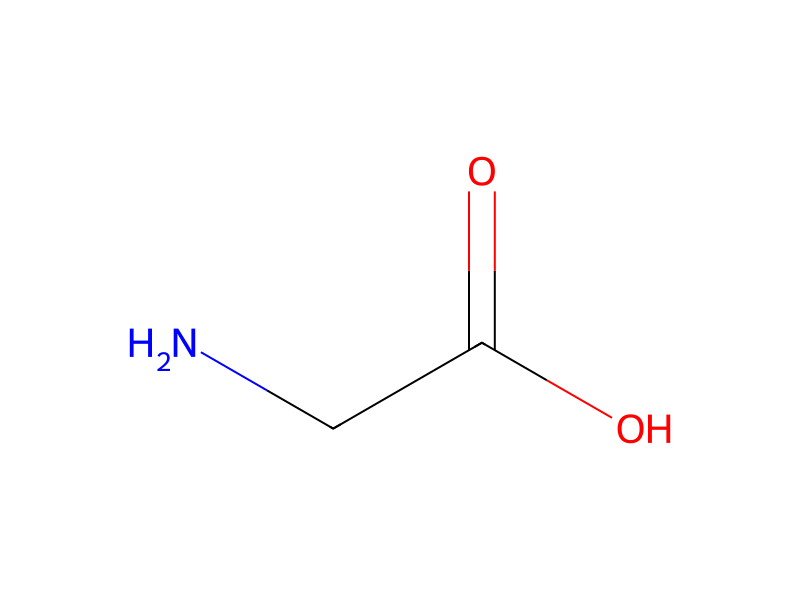
Glycine → 2-((4-Phenylphenyl)formamido)acetic acid
Reaction equation

[NH2:1][CH2:2][C:3]([OH:5])=[O:4].[C:6]1([C:15]2[CH:20]=[CH:19][CH:18]=[CH:17][CH:16]=2)[CH:11]=[CH:10][C:9]([C:12](Cl)=[O:13])=[CH:8][CH:7]=1.[OH-].[Na+].CCOCC>C1COCC1>[C:15]1([C:6]2[CH:7]=[CH:8][C:9]([C:12]([NH:1][CH2:2][C:3]([OH:5])=[O:4])=[O:13])=[CH:10][CH:11]=2)[CH:16]=[CH:17][CH:18]=[CH:19][CH:20]=1Participants
6
Reactant 4



Product 1

Reagents, catalysts & solvents 1

Procedure
Glycine (5 mmol) was reacted with 4-biphenylcarbonyl chloride (about 5 mmol) in the presence of 1N NaOH solution (10 ml), ether (21 ml) and THF (2 ml) using the procedure described in Example 5. Most of the product precipitated as a solid on acidification of the aqueous layer during the work up. This was found to be quite insoluble in CHCl3 and EtOAc. It was largely dissolved in CH3CN (~35 ml) and filtered to remove insoluble material. Crystalline acid (0.81 g, 63%) was deposited on cooling, m.p. 207°-218° C. decomp.
Workup
- customMost of the product precipitated as a solid on acidification of the aqueous layer during the work up
- dissolutionIt was largely dissolved in CH3CN (~35 ml)
- filtrationfiltered
- customto remove insoluble material
- temperatureon cooling
Sources & evidence
- ORD record
- ord-b21137209c424be49af1133ba21fc451
- Source dataset
- uspto-grants-1988_03
- Patent number
- US04734426
Reaction notes
Loading…