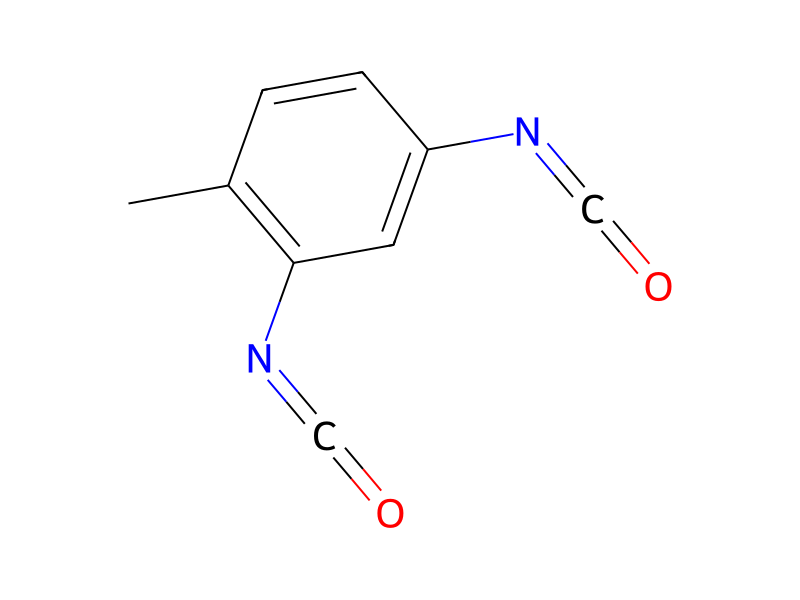
Toluene 2,4-Diisocyanate → Urethane acrylate
Reaction equation

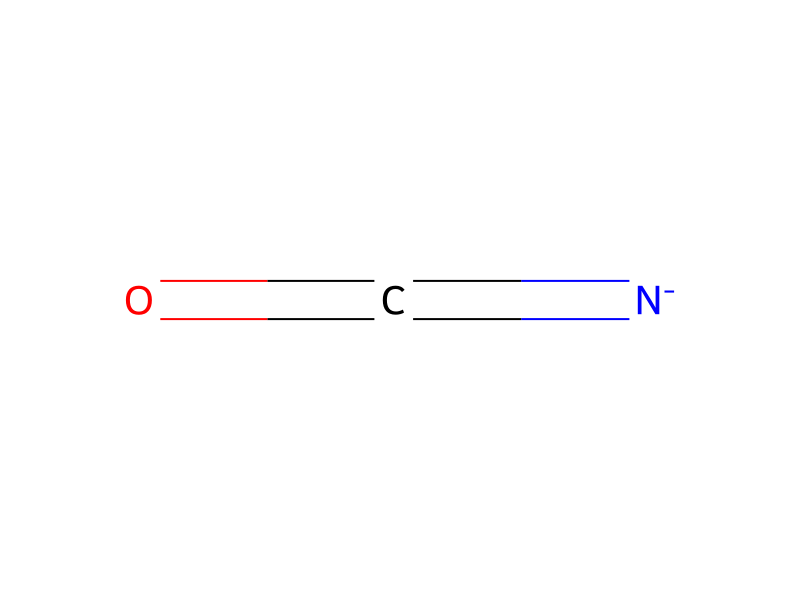
CC1C(=CC(=CC=1)N=C=O)N=C=O.[OH:14][CH2:15][CH2:16][O:17][C:18](=[O:21])[CH:19]=[CH2:20].[N-:22]=[C:23]=[O:24]>NC(OCC)=O>[C:18]([OH:21])(=[O:17])[CH:19]=[CH2:20].[NH2:22][C:23]([O:14][CH2:15][CH3:16])=[O:24]Participants
5
Reactant 3

Product 1

Reagents, catalysts & solvents 1

Conditions
- Temperature
- 82 °C
Procedure
An amount of toluene diisocyanate was added to a reaction vessel suspended in a room temperature water bath and stirred. The above product from Stage 1 was added incrementally to control exothermic activity. When the exothermic activity ceased the batch was heated to 82° C. and cooked for 1 hour. After the one hour cook the batch was cooled to 70° C. and polycaprolactone acrylate was added followed by an addition of hydroxyethylacrylate (HEA). A small amount of dibutyltindilaurate, a urethane catalyst, was also added to aid bringing the reaction to completion. The batch was cooked at 82° C. until no free isocyanate was detected by FTIR. The equivalent ratio of TDI:Stage 1 product:polycaprolactone acrylate:HEA was 2.0:1.0:0.5:0.5.
Workup
- customsuspended in a room temperature
- customAfter the one hour
- temperaturewas cooled to 70° C.
- customthe reaction to completion
Sources & evidence
- ORD record
- ord-94bda4f6c51043a794845d60e746ed4c
- Source dataset
- uspto-grants-2015_05
- Patent number
- US09029489B2
Reaction notes
Loading…