tert-Butanol → (R)-(-)-1,2,3,4-Tetrahydro-1-naphthol
Reaction equation

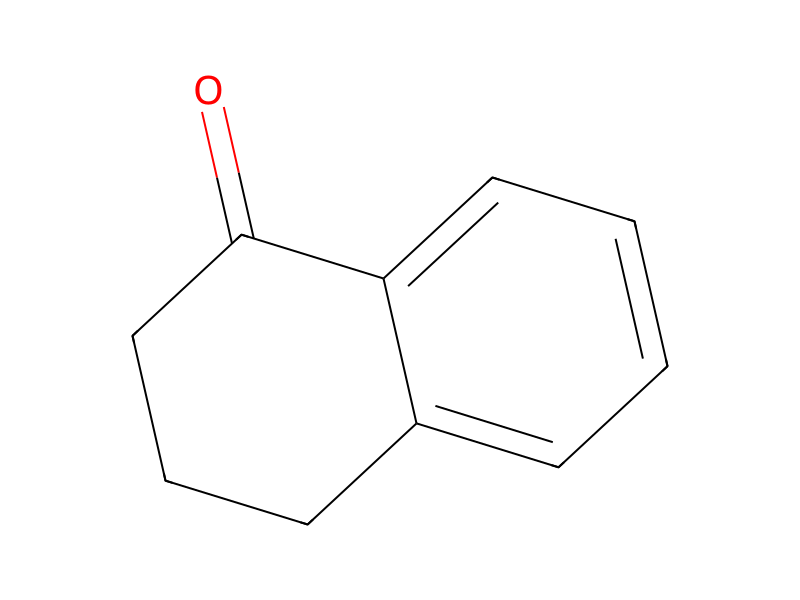
[C:1]1(=[O:11])[C:10]2[C:5](=[CH:6][CH:7]=[CH:8][CH:9]=2)[CH2:4][CH2:3][CH2:2]1.CC([O-])(C)C.[K+].C(O)(C)(C)C>C(O)(C)C>[C@H:1]1([OH:11])[C:10]2[C:5](=[CH:6][CH:7]=[CH:8][CH:9]=2)[CH2:4][CH2:3][CH2:2]1Participants
Reactant 3


Product 1

Reagents, catalysts & solvents 1

Conditions
- Temperature
- 60 °C
Procedure
General procedure for hydrogenation: Hydrogenation of 28 illustrates the typical reaction procedure: To a mixture of 1-tetralone, 28, (10.0 g, 66.4 mmol) and RuCl2[(2R,2′R,3S,3′S)-MeO-BIBOP](amqui), 27, (1.0 mg, 0.001 mmol, 0.002 mol %) was added isopropanol (40 mL) and a 1 M solution of t-BuOK in tert-butanol (1.33 mL, 1.33 mmol, 0.02 equiv). The autoclave reactor was first purged with nitrogen, then with hydrogen, and then the reaction mixture was stirred at 60° C. under 400 psi of hydrogen for 20 h. After venting the hydrogen gas, the solvent was removed under reduced pressure. The residue was purified by silica-gel column chromatography with ethyl acetate/hexane (0-50%) as eluent to give (R)-1,2,3,4-tetrahydro-1-naphthol, 29, (colorless oil, 9.6 g, 98% yield, 96:4 er). The er of 1,2,3,4-tetrahydro-1-naphthol was determined by HPLC analysis: column, Chiralcel OJ-3, 4.6×150 mm; eluent, heptane/isopropanol (95:5); flow rate, 1 mL/min; column temperature, 25° C.; retention time (tR) of (R)-1,2,3,4-tetrahydro-1-naphthol, 7.45 min (95.8%); tR of (S)-1,2,3,4-tetrahydro-1-naphthol, 5.75 min (4.2%). [α]D=−31.2 (c=2.0, MeOH).
Workup
- customthe typical reaction procedure
- customThe autoclave reactor was first purged with nitrogen
- customthe solvent was removed under reduced pressure
- customThe residue was purified by silica-gel column chromatography with ethyl acetate/hexane (0-50%) as eluent
Sources & evidence
- ORD record
- ord-d26dae10e3194b47bf8146ae326b1c45
- Source dataset
- uspto-grants-2015_05
- Patent number
- US09029540B2
Reaction notes
Loading…