Water → 1-(2-Oxo-2-phenyl-ethyl)-3,4-dihydro-1H-naphthalen-2-one
Reaction equation

[CH2:1](Br)[C:2]([C:4]1[CH:9]=[CH:8][CH:7]=[CH:6][CH:5]=1)=[O:3].[CH:11]1[C:20]2[C:15](=[CH:16][CH:17]=[CH:18][CH:19]=2)[CH2:14][CH2:13][C:12]=1N1CCCC1.[OH2:26]>C1(C)C=CC=CC=1>[O:3]=[C:2]([C:4]1[CH:9]=[CH:8][CH:7]=[CH:6][CH:5]=1)[CH2:1][CH:11]1[C:20]2[C:15](=[CH:16][CH:17]=[CH:18][CH:19]=2)[CH2:14][CH2:13][C:12]1=[O:26]Participants
5
Reactant 3

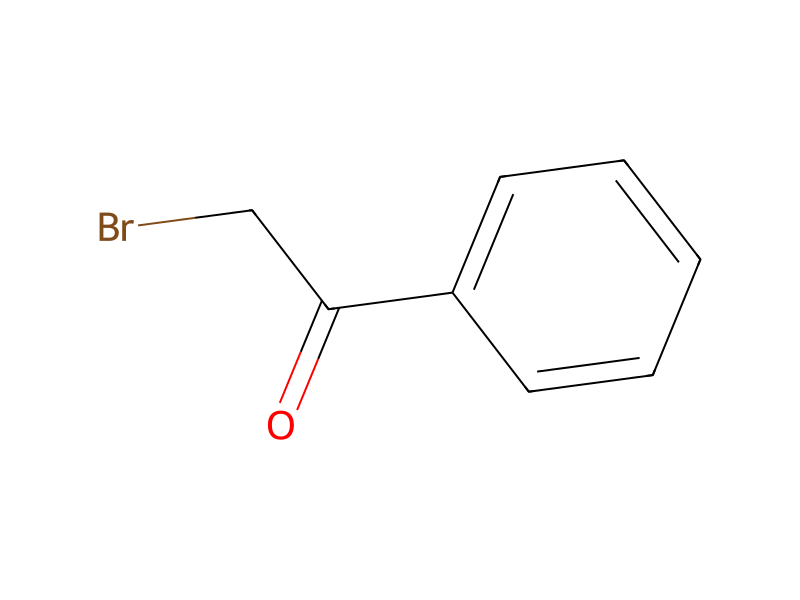

Product 1

Reagents, catalysts & solvents 1

Procedure
A solution of phenacylbromide (5.21 g, 26.1 mmol) in toluene (16 mL) was added over 15 minutes to a boiling, stirred solution of 1-(3,4-dihydro-2-naphthyl)pyrrolidine (5.21 g, 26.2 mmol) in toluene (17 mL). The reaction was refluxed 3 hours, diluted with water (15 mL) and refluxed for 4 hours then cooled. The layers were separated and the aqueous phase was extracted with toluene and dried over MgSO4 and concentrated. The material was purified by MPLC using a gradient from 0 to 20% ethyl acetate/hexanes to afford 4.85 g (70% yield) title product as a yellow oil.
Workup
- temperatureThe reaction was refluxed 3 hours
- temperaturerefluxed for 4 hours
- temperaturethen cooled
- customThe layers were separated
- extractionthe aqueous phase was extracted with toluene
- dry with materialdried over MgSO4
- concentrationconcentrated
- customThe material was purified by MPLC
Sources & evidence
- ORD record
- ord-8e0c7071463f475db0bd0c6a1b40e761
- Source dataset
- uspto-grants-2015_05
- Patent number
- US09034871B2
Reaction notes
Loading…