Nitric Acid → 2,6-Dibromo-4-nitropyridine
Reaction equation

[Br:1][C:2]1[CH:7]=[CH:6][CH:5]=[C:4]([Br:8])[N+:3]=1[O-].[N+:10]([O-])([OH:12])=[O:11].P(Br)(Br)Br.C([O-])(O)=O.[Na+]>OS(O)(=O)=O>[Br:1][C:2]1[CH:7]=[C:6]([N+:10]([O-:12])=[O:11])[CH:5]=[C:4]([Br:8])[N:3]=1Participants
Reactant 4

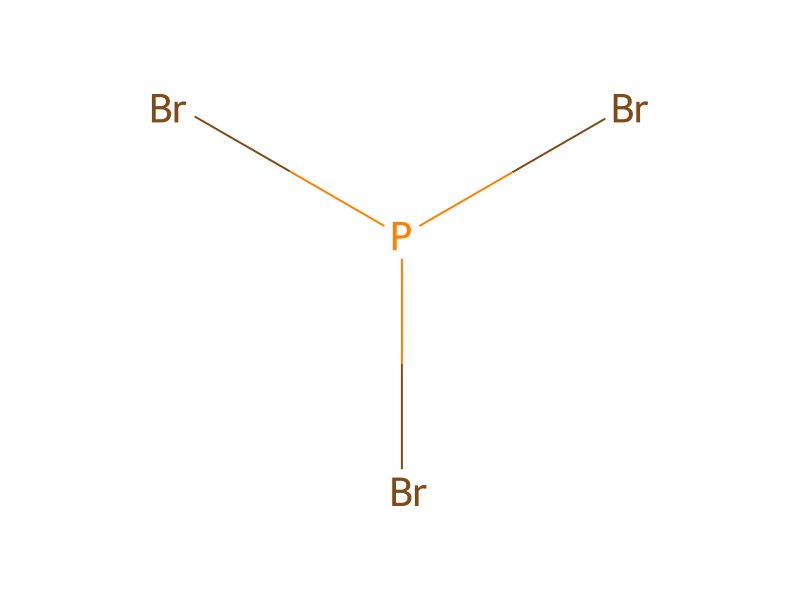


Product 1

Reagents, catalysts & solvents 1

Conditions
- Temperature
- 90 °C
Procedure
A solution of 20 g (78 mmol) of 2,6-dibromopyridine 1-oxide is warmed to 40° C. in 70 ml of H2SO4. Nitrating acid (70 ml of H2SO4 and 34 ml of fuming HNO3) is added to the solution at this temperature. The reaction mixture is heated at 90° C. for 3 h. After cooling, the reaction mixture is poured into 800 ml of ice-water. The solid which has precipitated out is filtered off and washed with water. After drying, the 2,6-dibromo-4-nitropyridine 1-oxide (17.9 g) is suspended in 200 ml of chloroform, 6 ml of phosphorus tribromide (64 mmol) are added at room temperature, and the mixture is stirred for 1 h and then heated under reflux for 2 days. After cooling, the solution is poured into 500 ml of ice-water, and the mixture is neutralised using solid NaHCO3. The aqueous phase is separated off and extracted a number of times with CHCl3, and the combined organic phases are washed with a sodium thiosulfate solution and then with water, dried and evaporated. The residue is recrystallised from EtOH. Yield: 41.7 g (148 mmol), 70% of theory.
Workup
- temperatureAfter cooling
- customThe solid which has precipitated out
- filtrationis filtered off
- washwashed with water
- customAfter drying
- temperatureheated
- temperatureunder reflux for 2 days
- temperatureAfter cooling
- customThe aqueous phase is separated off
- extractionextracted a number of times with CHCl3
- washthe combined organic phases are washed with a sodium thiosulfate solution
- dry with materialwith water, dried
- customevaporated
- customThe residue is recrystallised from EtOH
Sources & evidence
- ORD record
- ord-626236d26b2949de93b12a8a48f81d0b
- Source dataset
- uspto-grants-2015_05
- Patent number
- US09040172B2
Reaction notes
Loading…