Butanal → Vinyl Acetate
Reaction equation

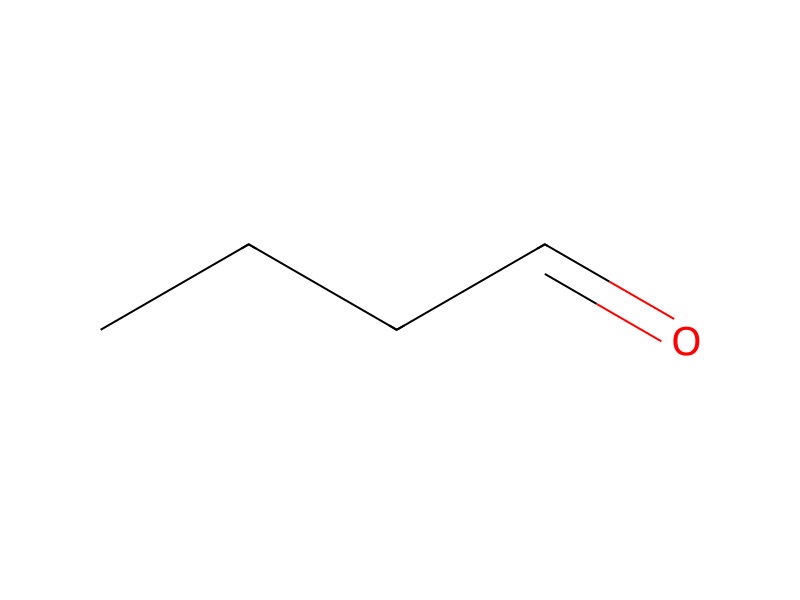
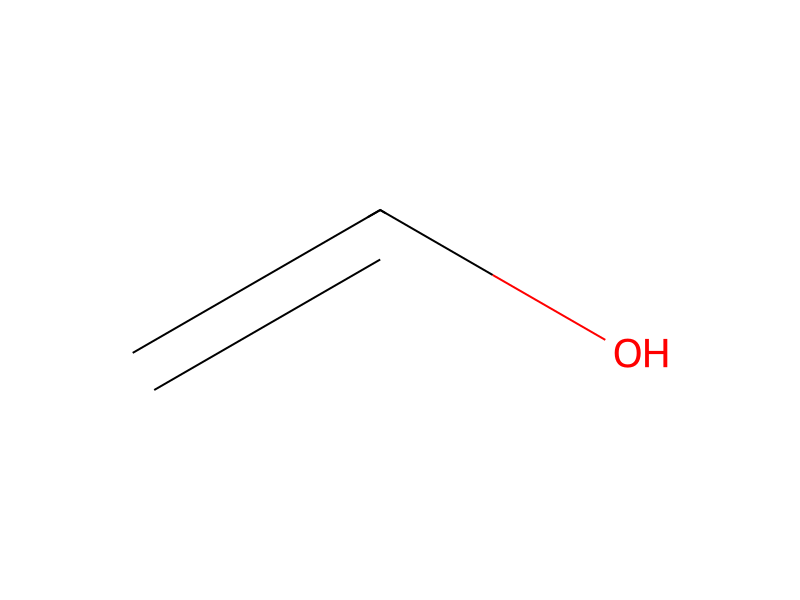
[C:1]([O:4][CH:5]=[CH2:6])(=[O:3])[CH3:2].[OH-].[Na+].Cl.C(=O)CCC>>[CH:1]([OH:3])=[CH2:2].[C:1]([O:4][CH:5]=[CH2:6])(=[O:3])[CH3:2]Participants



Conditions
- Temperature
- 90 °C
Procedure
1000 parts by weight of a 10% by weight solution of polyvinyl alcohol having a degree of polymerization Pn of about 1300 and a vinyl acetate unit content of 1.8% by weight are heated to 90° C. and, after the addition of 9.3 parts by weight of 10% by weight sodium hydroxide solution, stirred for 30 minutes at 90° C. The solution is then cooled to 16° C., the cooling time between 40° C. and 16° C. being 20 minutes, and treated with 65 parts by weight of concentrated hydrochloric acid. 57.6 parts by weight of n-butyraldehyde are added continuously to this mixture in the course of 20 minutes, with stirring. One hour after completion of the aldehyde addition, the batch is heated with stirring to 50° C. within one hour and kept for three hours at this temperature. After working up as described in Example 1, a pulverulent polyvinylbutyral containing 21.6% by weight of vinyl alcohol units and 0.1% by weight of vinyl acetate units is obtained. The polymer is mixed with 29% by weight of triethylene glycol bis-heptanoate as the plasticizer and 0.015% by weight of potassium formate (10% by weight in water), relative to the mixture, and extruded to give a 0.76 mm thick film. Laminated glass is produced from the film, as described in Example 1.
Workup
- temperatureThe solution is then cooled to 16° C.
- waitthe cooling time between 40° C. and 16° C. being 20 minutes
- stirringwith stirring
- temperaturethe batch is heated
- stirringwith stirring to 50° C. within one hour
- waitkept for three hours at this temperature
Sources & evidence
- ORD record
- ord-b26e6a87095c4c38a6bb041933f78982
- Source dataset
- uspto-grants-1988_06
- Patent number
- US04751266
Reaction notes
Loading…