Acetone → ethyl 3-(2-propylidenehydrazinyl)-2-(2,3,4,5-tetrafluorobenzoyl)prop-2-enoate
Reaction equation

O.[NH2:2][NH2:3].[CH3:4][C:5]([CH3:7])=O.[F:8][C:9]1[C:26]([F:27])=[C:25]([F:28])[C:24]([F:29])=[CH:23][C:10]=1[C:11]([C:13](=[CH:19]OCC)[C:14]([O:16][CH2:17][CH3:18])=[O:15])=[O:12].C(=O)=O.CC(C)=O>C(O)C>[F:8][C:9]1[C:26]([F:27])=[C:25]([F:28])[C:24]([F:29])=[CH:23][C:10]=1[C:11]([C:13](=[CH:19][NH:2][N:3]=[CH:4][CH2:5][CH3:7])[C:14]([O:16][CH2:17][CH3:18])=[O:15])=[O:12]Participants
6
Reactant 4



Product 1

Reagents, catalysts & solvents 1

Procedure
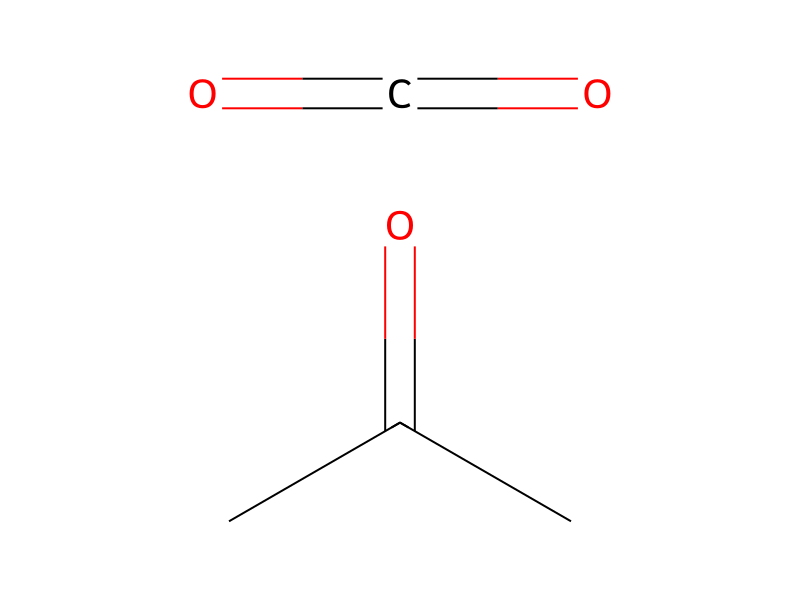
First 2.8 g of hydrazine hydrate and, 30 minutes later, 12.8 g of acetone are added dropwise to a solution of 16 g of ethyl 2-(2,3,4,5-tetrafluorobenzoyl)-3-ethoxyacrylate in 70 ml of ethanol, while cooling with dry ice/acetone at -25° C. to -30° C. The mixture is allowed to come slowly to room temperature and is then stirred at 20° C. to 25° C. for a further hour. The solvent is then distilled off in vacuo and the orange-colored residue is recrystallized from cyclohexane/light petrol. 12.5 g of ethyl 2-(2,3,4,5-tetrafluorobenzoyl)-3-(2-propylidenehydrazino)acrylate of melting point 86° C. are obtained.
Workup
- customto come slowly to room temperature
- distillationThe solvent is then distilled off in vacuo
- customthe orange-colored residue is recrystallized from cyclohexane/light petrol
Sources & evidence
- ORD record
- ord-dba5329a6b904844a502102faee4bde5
- Source dataset
- uspto-grants-1988_06
- Patent number
- US04753925
Reaction notes
Loading…