Sodium Hydroxide → HCID 13756051, compound
Reaction equation

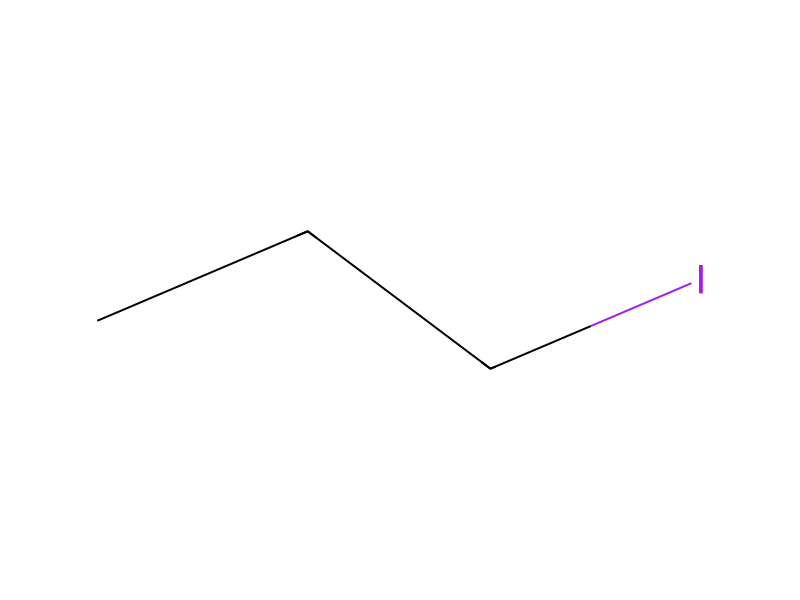
[OH-].[Na+].[NH2:3][C:4]1[C:5]2[C:10]([N:11]=[C:12]3[C:17]=1[C:16](=[O:18])[CH2:15][CH2:14][CH2:13]3)=[CH:9][CH:8]=[CH:7][CH:6]=2.[CH2:19](I)[CH2:20][CH3:21]>S([O-])(O)(=O)=O.C([N+](CCCC)(CCCC)CCCC)CCC.ClCCl>[CH2:19]([NH:3][C:4]1[C:5]2[C:10]([N:11]=[C:12]3[C:17]=1[C:16](=[O:18])[CH2:15][CH2:14][CH2:13]3)=[CH:9][CH:8]=[CH:7][CH:6]=2)[CH2:20][CH3:21]Participants




Procedure
In a mixture consisting of 150 ml of dichloromethane and 100 ml of 50% NaOH were combined 5.00 g of 9-amino-3,4-dihydroacridin-1(2H)-one and 0.80 g (0.10 eq) of tetrabutylammonium hydrogensulfate. The biphasic mixture was stirred for 0.5 hour and thereafter 6.9 ml (3 eq) of n-propyl iodide was added and the stirring at room temperature was continued for 2 days during which three more portions of the above quantities of the alkylating agent were added at 12 hour intervals. The reaction was then complete based on thin layer chromatography analysis. The organics were separated and purified by passing through an alumina column (dichloromethane). The product was recrystallized from dichloromethane/Et2O to yield 3.77 g (63%) of a solid, melting point 145° C.
Workup
- waitthe stirring at room temperature was continued for 2 days during which three more portions of the above quantities of the alkylating agent
- additionwere added at 12 hour intervals
- customThe organics were separated
- custompurified
- customThe product was recrystallized from dichloromethane/Et2O
Sources & evidence
- ORD record
- ord-392a3b973d034727a204823490396eb1
- Source dataset
- uspto-grants-1988_06
- Patent number
- US04754050
Reaction notes
Loading…