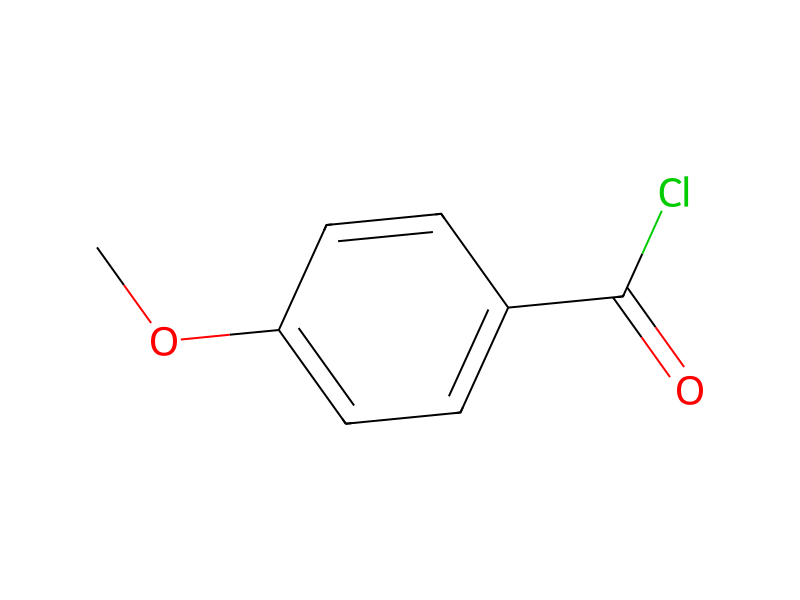
p-Anisoyl chloride → HCID 5097621, compound
Reaction equation

[C:1](Cl)(=[O:10])[C:2]1[CH:7]=[CH:6][C:5]([O:8][CH3:9])=[CH:4][CH:3]=1.[SH:12][C:13]1[CH:18]=[CH:17][CH:16]=[CH:15][N:14]=1>C1COCC1>[CH3:9][O:8][C:5]1[CH:6]=[CH:7][C:2]([C:1](=[O:10])[S:12][C:13]2[CH:18]=[CH:17][CH:16]=[CH:15][N:14]=2)=[CH:3][CH:4]=1Participants
4
Reactant 2

Product 1

Reagents, catalysts & solvents 1

Procedure
Following the general procedure described above, reaction of p-anisoyl chloride (4.70 g, 30.0 mmol) with 2-mercaptopyridine (3.33 g, 30.0 mmol) in THF (30 mL) for 30 min at room temperature afforded pale yellow solid after precipitation (6.70 g, 91%): mp 73° C.; 1H NMR δ 3.88 (s, 3H), 6.93-7.00 (m, 2H), 7.30-7.34 (m, 1H), 7.70-7.74 (m, 2H), 7.75-7.80 (m, 1H), 7.97-8.02 (m, 1H), 8.64-8.69 (m, 1H); Anal. Calcd for C13H11NO2S: C, 63.65; H, 4.52; N, 5.71. Found: C, 63.78; H, 4.59; N, 5.66.
Workup
- customafforded pale yellow solid
- customafter precipitation (6.70 g, 91%)
Sources & evidence
- ORD record
- ord-d54c4a2a555140b1992fe756bbaf5f63
- Source dataset
- uspto-grants-2005_08
- Patent number
- US06924375B2
Reaction notes
Loading…