Trifluoroacetic acid → 2,5-Diisopropyl-1-bromo-benzene
Reaction equation

FC(F)(F)C(O)=O.C([C:11]1([Br:21])[CH:16]=[CH:15][CH:14]=[C:13]([CH:17]([CH3:19])[CH3:18])[CH:12]1N)(C)C.[CH2:22](ON=O)[CH2:23][CH:24](C)C.O[PH2]=O>CCO>[CH:23]([C:16]1[CH:15]=[CH:14][C:13]([CH:17]([CH3:18])[CH3:19])=[CH:12][C:11]=1[Br:21])([CH3:24])[CH3:22]Participants
6
Reactant 4



Product 1

Reagents, catalysts & solvents 1

Procedure
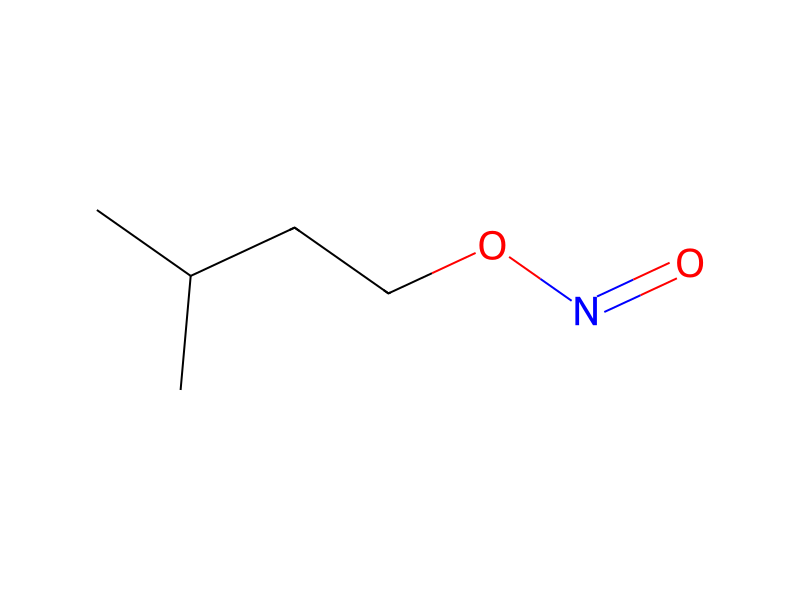
Trifluoroacetic acid (75 mL was added to a solution of Intermediate 34 in EtOH (100 mL) at 0° C. After stirring for 10 min, iso-amylnitrite (100 mL) was then added and the mixture was stirred for another 70 min. H3PO2 (70 mL) was added slowly and the mixture was warmed to ambient temperature over 5 hours. After dilution with ethyl acetate and sodium bicarbonate solution, the organic layer was separated, dried and concentrated to give the title compound in a crude form (17 g). Purification of the crude product by Kugelrohr distillation gave the title compound in pure form (13 g, 44% yield over 4 steps from 1,3-di-iso-propyl-benzene) as a colorless oil:
Workup
- stirringthe mixture was stirred for another 70 min
- customAfter dilution with ethyl acetate and sodium bicarbonate solution, the organic layer was separated
- customdried
- concentrationconcentrated
Sources & evidence
- ORD record
- ord-55a2fa4ef75c41aa96be375c7753a323
- Source dataset
- uspto-grants-2005_08
- Patent number
- US06936636B2
Reaction notes
Loading…