Ethanol → aldehydo-D-Xylose
Reaction equation

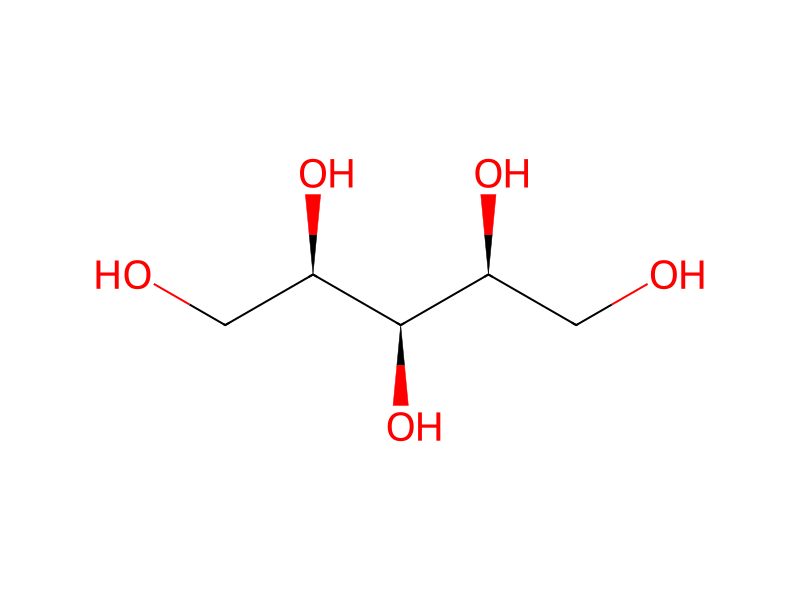
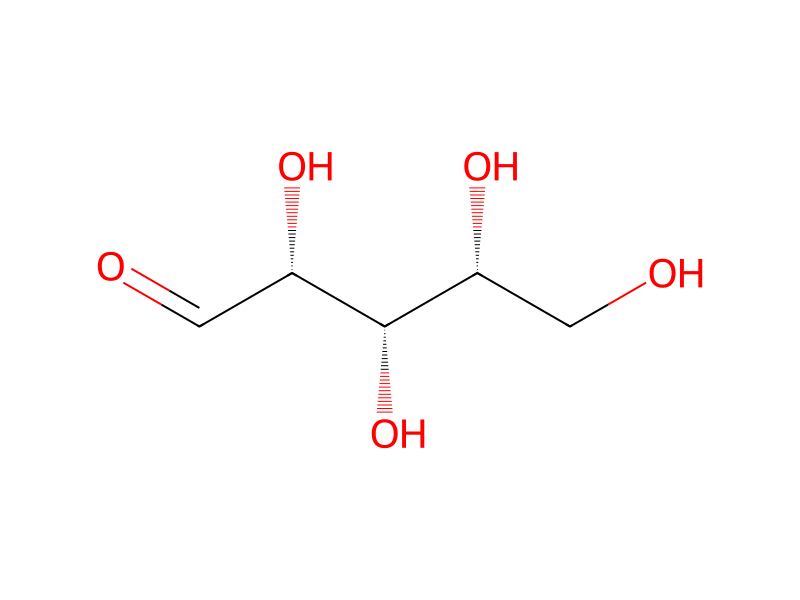
C(O)C.[CH2:4]([OH:13])[C@@H:5]([C@H:7]([C@@H:9]([CH2:11][OH:12])[OH:10])[OH:8])[OH:6]>>[O:12]=[CH:11][C@@H:9]([C@H:7]([C@@H:5]([CH2:4][OH:13])[OH:6])[OH:8])[OH:10]Participants

Procedure
Xylose fermentation by the constructed strains was compared in batch cultures with limited aeration. A mineral medium containing xylose (12%) and initial biomass concentration 2 g (dry weight)×L−1 were used. Results of ethanol and xylitol production by the constructed strains are shown in Table 2. Ethanol productivity of the XRm strain was 9.8 mg×(L×h)−1, which is 1.5- and 1.3-fold higher than the productivity of the XRn and the wild-type strain CBS4732, respectively. Xylitol production of these strains varied insignificantly. Ethanol productivity of the strain XRm/XDH (18.4 mg×(L×h)−1) was increased 1.5 and 2.4 times as compared to XRn/XDH and CBS4732, respectively. Strain XRm/XDH possessed 1.3- and 2.6-fold reduction in xylitol production compared with XRn/XDH and CBS4732 strains. Ethanol productivity of the strain XRm/XDH/XK (54.7 mg×(L×h)−1) was 4- and 7.4-fold higher compared to those of the strain XRn/XDH/XK (13.8 mg×(L×h)−1) and CBS4732 (7.5 mg×(L×h)−1). The xylitol production of the strain XRm/XDH/XK was significantly reduced to 0.9 mg×(L×h)−1, which is 4.7- and 3-fold lower than those of the XRn/XDH/XK and control strain, respectively. Representative fermentation profiles for the strains XRn/XDH/XK, XRm/XDH/XK and CBS4732 are shown in FIG. 3. It has to be mentioned, that the consumption of xylose by H. polymorpha strains during the fermentation is low. Ethanol produced in the initial stage of xylose fermentation is reutilized after 1-2 days of the fermentation.
Workup
- customto be mentioned, that the consumption of xylose by H
Sources & evidence
- ORD record
- ord-b8b668eef65c48859a8aed8a880dafbd
- Source dataset
- uspto-grants-2016_01
- Patent number
- US09228178B2
Reaction notes
Loading…