Dichloromethane → 3-Difluoromethoxy-8-nitro-quinoline
Reaction equation

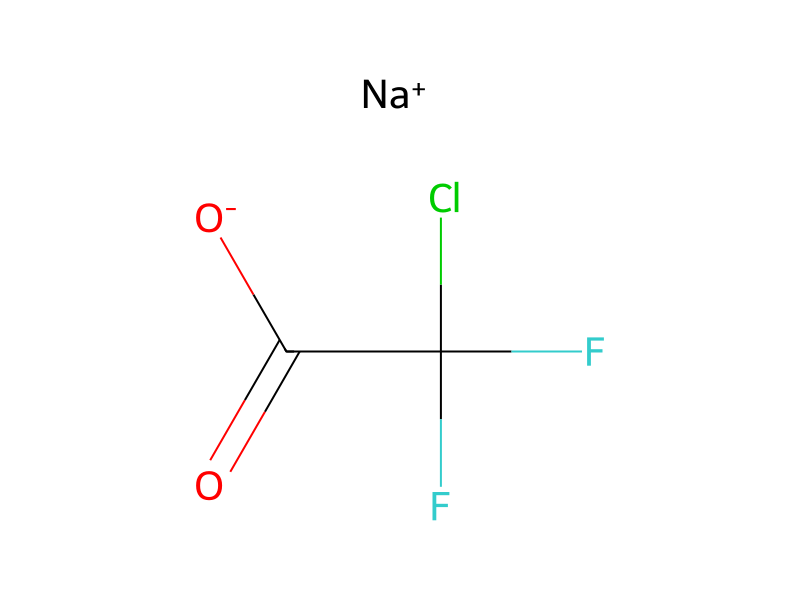
[N+:1]([C:4]1[CH:5]=[CH:6][CH:7]=[C:8]2[C:13]=1[N:12]=[CH:11][C:10]([OH:14])=[CH:9]2)([O-:3])=[O:2].Cl[C:16]([F:21])([F:20])C([O-])=O.[Na+].C(=O)([O-])[O-].[Na+].[Na+].ClCCl>CN(C)C=O>[F:20][CH:16]([F:21])[O:14][C:10]1[CH:11]=[N:12][C:13]2[C:8]([CH:9]=1)=[CH:7][CH:6]=[CH:5][C:4]=2[N+:1]([O-:3])=[O:2]Participants
6





Conditions
- Temperature
- 100 °C
Procedure
A solution of 8-nitro-quinolin-3-ol (CAS25369-37-3) (500 mg, 2.63 mmol) in dimethylformamide (5 ml) was treated with sodium chlorodifluoroacetate (481 mg, 3.15 mmol). The mixture was heated to 100° C. overnight under a nitrogen atmosphere. For the workup, the reaction mixture was cooled to room temperature, then saturated aqueous sodium carbonate solution and dichloromethane were added. The organic layer was separated, dried over sodium sulphate, then evaporated. The crude product was purified by chromatography on silica gel using a gradient of cyclohexane/ethyl acetate=9:1 to 8:1 as the eluent yielding 100 mg (16%) of the 3-difluoromethoxy-8-nitro-quinoline as a yellow solid; (calculated) C10H6F2N2O3 [240.2]; (found) [M+H]+=241.
Workup
- temperatureFor the workup, the reaction mixture was cooled to room temperature
- customThe organic layer was separated
- dry with materialdried over sodium sulphate
- customevaporated
- customThe crude product was purified by chromatography on silica gel using a gradient of cyclohexane/ethyl acetate=9:1 to 8:1 as the eluent
Sources & evidence
- ORD record
- ord-fe05429b5cf541c390a11dd38dc7a5de
- Source dataset
- uspto-grants-2016_01
- Patent number
- US09242943B2
Reaction notes
Loading…