Morpholine → HCID 21717544, compound
Reaction equation

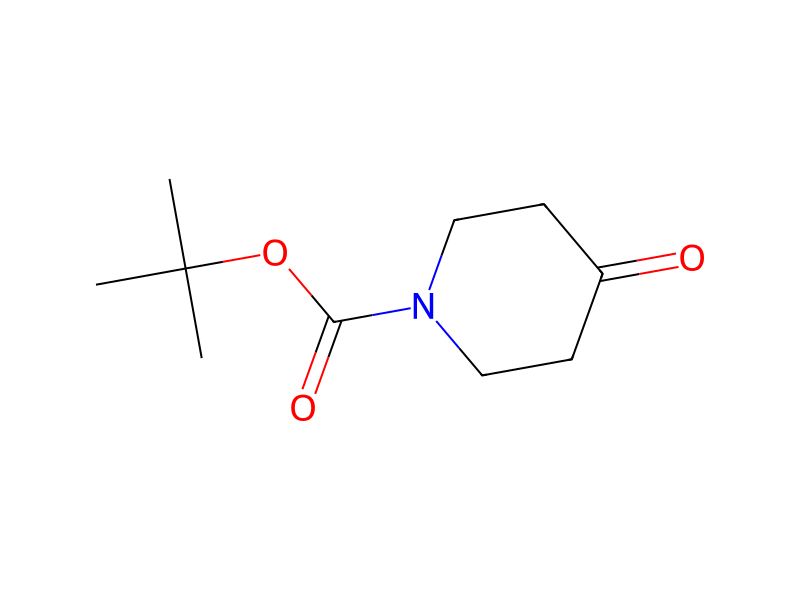
O=[C:2]1[CH2:7][CH2:6][N:5]([C:8]([O:10][C:11]([CH3:14])([CH3:13])[CH3:12])=[O:9])[CH2:4][CH2:3]1.[NH:15]1[CH2:20][CH2:19][O:18][CH2:17][CH2:16]1>C1C=CC=CC=1.C1(C)C=CC(S(O)(=O)=O)=CC=1>[O:18]1[CH2:19][CH2:20][N:15]([C:2]2[CH2:7][CH2:6][N:5]([C:8]([O:10][C:11]([CH3:14])([CH3:13])[CH3:12])=[O:9])[CH2:4][CH:3]=2)[CH2:16][CH2:17]1Participants
5
Reactant 2

Product 1

Reagents, catalysts & solvents 2


Procedure
In a round-bottom flask equipped with a Dean-Starke trap, 20 g of tert-butyl 4-oxopiperidine-1-carboxylate, 0.1 mol), morpholine (9.63 mL, 0.11 mol) and p-toluenesulfonic acid (5 mg) in benzene (42.3 mL) was heated up to reflux. Water was removed and the reaction was continued at reflux for 8 hours. The reaction mixture was then cooled to room temperature and concentrated in vacuo to give crude product as a yellow oil (27 g), which was used for next step without further purification.
Workup
- temperaturewas heated up
- temperatureto reflux
- customWater was removed
- temperatureat reflux for 8 hours
- concentrationconcentrated in vacuo
Sources & evidence
- ORD record
- ord-d745e5030e6e4834a5c3c08ee9a46ca2
- Source dataset
- uspto-grants-2016_01
- Patent number
- US09242981B2
Reaction notes
Loading…