Bromomethyl 4-methoxyphenyl ketone → Pyridinium, 4-ethyl-1-(2-oxo-2-phenylethyl)-, bromide
Reaction equation

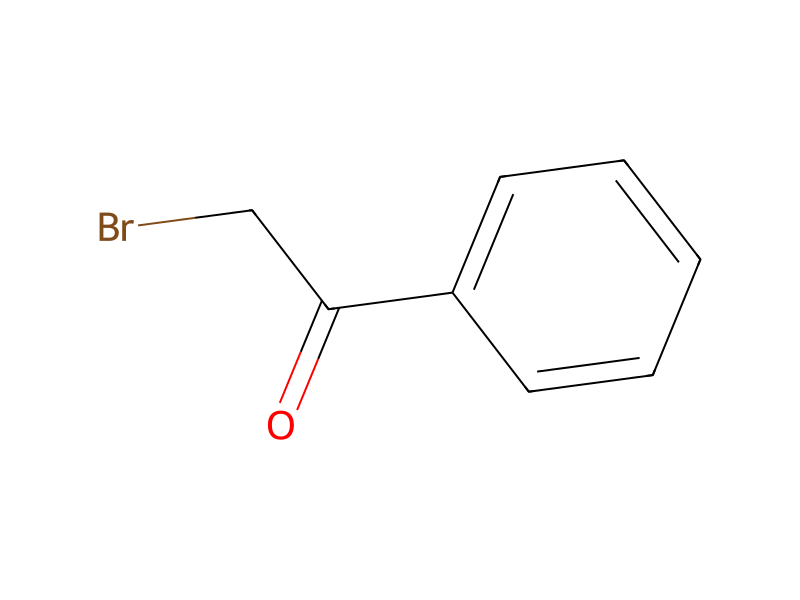
CO[C:3]1[CH:12]=[CH:11][C:6]([C:7](=[O:10])[CH2:8][Br:9])=[CH:5][CH:4]=1.C(Br)C(C1C=CC=CC=1)=O.[CH2:23]([C:25]1[CH:30]=[CH:29][N:28]=[CH:27][CH:26]=1)[CH3:24]>N1C=CC=CC=1>[Br-:9].[CH2:8]([N+:28]1[CH:29]=[CH:30][C:25]([CH2:23][CH3:24])=[CH:26][CH:27]=1)[C:7]([C:6]1[CH:11]=[CH:12][CH:3]=[CH:4][CH:5]=1)=[O:10]Participants
5
Reactant 3


Product 1

Reagents, catalysts & solvents 1

Procedure
Employing the procedure of Example I but replacing 4-methoxyphenacyl bromide with a substantially equimolecular amount of phenacyl bromide and replacing pyridine with a substantially equimolecular amount of 4-ethylpyridine there is obtained N-(phenacyl)4-ethyl-pyridinium bromide, a white solid melting at 236-238° C., and which is soluble in water.
Sources & evidence
- ORD record
- ord-422cc52f32344c71800667d1a2fa35b3
- Source dataset
- uspto-grants-1977_03
- Patent number
- USRE029153
Reaction notes
Loading…