Cesium carbonate → (R)-6-chloro-2-(5-fluoro-2-nitrophenylamino)-9-(8-fluorochroman-4-yl)-7H-purin-8(9H)-one
Reaction equation

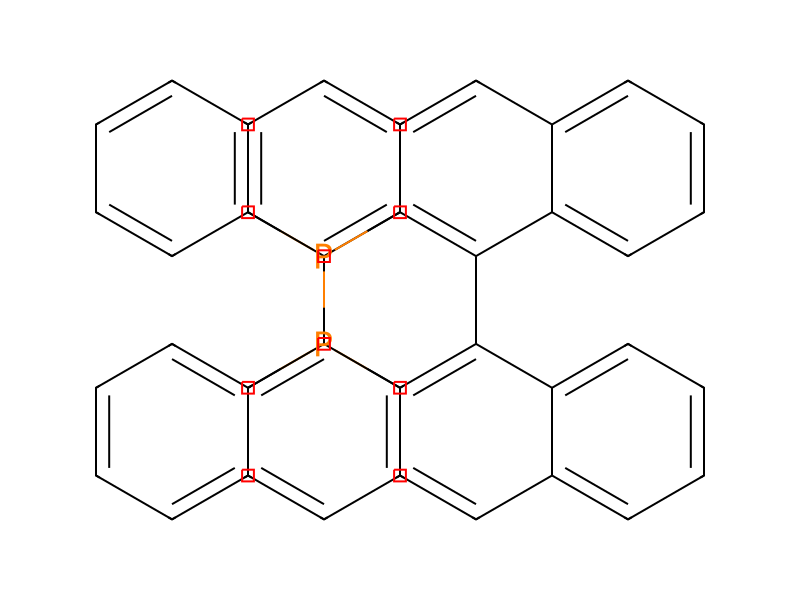
[NH2:1][C:2]1[N:10]=[C:9]2[C:5]([NH:6][C:7](=[O:22])[N:8]2[C@H:11]2[C:20]3[C:15](=[C:16]([F:21])[CH:17]=[CH:18][CH:19]=3)[O:14][CH2:13][CH2:12]2)=[C:4]([Cl:23])[N:3]=1.C(=O)([O-])[O-].[Cs+].[Cs+].C1C=CC(P(C2C(C3C(P(C4C=CC=CC=4)C4C=CC=CC=4)=CC=C4C=3C=CC=C4)=C3C(C=CC=C3)=CC=2)C2C=CC=CC=2)=CC=1.Br[C:77]1[CH:82]=[C:81]([F:83])[CH:80]=[CH:79][C:78]=1[N+:84]([O-:86])=[O:85]>C1(C)C=CC=CC=1.CC([O-])=O.CC([O-])=O.[Pd+2]>[Cl:23][C:4]1[N:3]=[C:2]([NH:1][C:77]2[CH:82]=[C:81]([F:83])[CH:80]=[CH:79][C:78]=2[N+:84]([O-:86])=[O:85])[N:10]=[C:9]2[C:5]=1[NH:6][C:7](=[O:22])[N:8]2[C@H:11]1[C:20]2[C:15](=[C:16]([F:21])[CH:17]=[CH:18][CH:19]=2)[O:14][CH2:13][CH2:12]1Participants
Reactant 4



Product 1

Reagents, catalysts & solvents 2


Procedure
To an oven-dried vial was added (R)-2-amino-6-chloro-9-(8-fluorochroman-4-yl)-7H-purin-8(9H)-one (152 mg, 0.45 mmol, 1 equiv.) in anhydrous toluene (2.5 mL), followed by freshly grounded cesium carbonate (207 mg, 0.64 mmol, 1.4 equiv.) with stirring at room temperature under Ar. After 10 min, Pd(OAc)2 (30.3 mg, 0.045 mmol, 0.1 equiv.), racemic BINAP (42 mg, 0.067 mmol, 0.15 equiv.) and 1-bromo-5-fluoro-2-nitrobenzene (130 mg, 0.59 mmol, 1.3 equiv.) were added as solids. The vial was purged with Ar for 3 min, then closed and heated at 80° C. for three days. The reaction mixture was cooled to room temperature, then poured into saturated aqueous NH4Cl (10 mL). To this mixture, saturated aqueous Na2EDTA (10 mL) was added and the mixture was stirred for 10 min. Then the reaction mixture was extracted with ethyl acetate (4×20 mL), the collected organic layers were washed with brine, dried (anhydrous Na2SO4) and the solvent evaporated in vacuo. Column chromatography of the residue on silica gel (gradual elution with 1% methanol in 4/2/1 hexane/methylene chloride/ethyl acetate to 2% methanol in 4/2/1 hexane/methylene chloride/ethyl acetate) afforded, after evaporation and drying, the desired product as an orange solid (76 mg, 46% yield based on 78% conversion), along with 33 mg of recovered starting material. 1H NMR (300 MHz, CDCl3) δ, ppm: 10.64 (s, 1H), 8.58 (s, 1H), 8.29-8.16 (m, 2H), 7.02-6.95 (m, 1H), 6.74-6.60 (m, 2H), 5.88-5.82 (m, 1H), 4.66-4.62 (m, 1H), 4.38 (app t, J=11.0 Hz, 1H), 4.38-4.28 (br m, 1H, overlapping with 4.38 ppm), 2.96-2.92 (m, 1H), 2.26-2.23 (m, 1H); MS (EI) m/z 475.2 (MH)+.
Workup
- customThe vial was purged with Ar for 3 min
- customclosed
- temperatureheated at 80° C. for three days
- temperatureThe reaction mixture was cooled to room temperature
- additionpoured into saturated aqueous NH4Cl (10 mL)
- additionTo this mixture, saturated aqueous Na2EDTA (10 mL) was added
- stirringthe mixture was stirred for 10 min
- extractionThen the reaction mixture was extracted with ethyl acetate (4×20 mL)
- washthe collected organic layers were washed with brine
- dry with materialdried (anhydrous Na2SO4)
- customthe solvent evaporated in vacuo
- customColumn chromatography of the residue on silica gel (gradual elution with 1% methanol in 4/2/1 hexane/methylene chloride/ethyl acetate to 2% methanol in 4/2/1 hexane/methylene chloride/ethyl acetate) afforded
- customafter evaporation
- customdrying
Sources & evidence
- ORD record
- ord-ba6646c13fd54d1fabb54f9007447e30
- Source dataset
- uspto-grants-2011_03
- Patent number
- US07902187B2
Reaction notes
Loading…