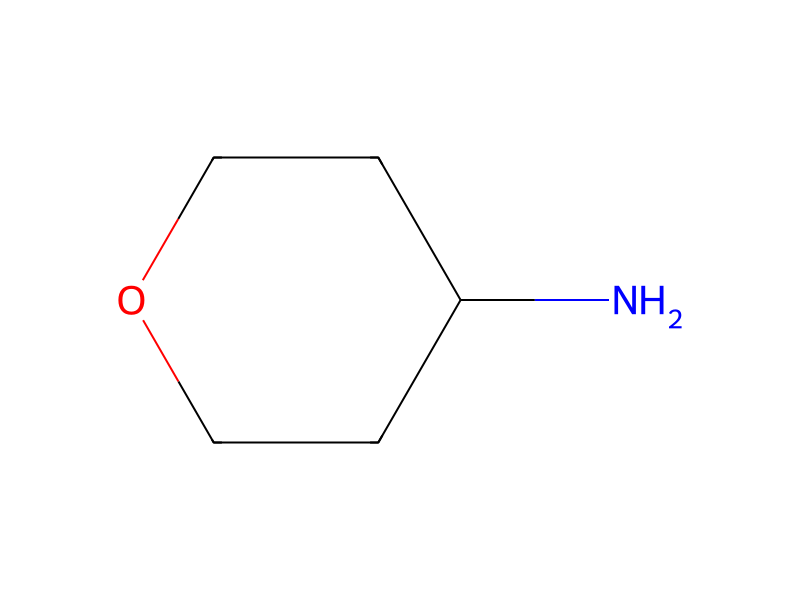
4-Aminotetrahydropyran → 5-[(5-Methyl-3-phenyl-isoxazol-4-ylmethyl)-amino]-pyrazine-2-carboxylic acid (tetrahydro-pyran-4-yl)-amide
Reaction equation

CO[C:3]([C:5]1[CH:10]=[N:9][C:8]([NH:11][CH2:12][C:13]2[C:14]([C:19]3[CH:24]=[CH:23][CH:22]=[CH:21][CH:20]=3)=[N:15][O:16][C:17]=2[CH3:18])=[CH:7][N:6]=1)=[O:4].[NH2:25][CH:26]1[CH2:31][CH2:30][O:29][CH2:28][CH2:27]1>>[O:29]1[CH2:30][CH2:31][CH:26]([NH:25][C:3]([C:5]2[CH:10]=[N:9][C:8]([NH:11][CH2:12][C:13]3[C:14]([C:19]4[CH:20]=[CH:21][CH:22]=[CH:23][CH:24]=4)=[N:15][O:16][C:17]=3[CH3:18])=[CH:7][N:6]=2)=[O:4])[CH2:27][CH2:28]1Participants
3


Procedure
As described for example 9b, 5-[(5-methyl-3-phenyl-isoxazol-4-ylmethyl)-amino]-pyrazine-2-carboxylic acid methyl ester (650 mg, 2 mmol) was converted, using 4-aminotetrahydropyran instead of isopropylamine, to the title compound (640 mg, 81%) which was obtained as a white solid. MS: m/e=350.4 [M+H]+.
Sources & evidence
- ORD record
- ord-ee63ddc388414cbc8fba6bcd5cbc763a
- Source dataset
- uspto-grants-2011_03
- Patent number
- US07902201B2
Reaction notes
Loading…