Phthalic Anhydride → 2-(4-hydroxy-2-oxoquinolin-1(2H)-yl)-1H-isoindole-1,3(2H)-dione
Reaction equation

[NH2:1][N:2]1[C:11]2[C:6](=[CH:7][CH:8]=[CH:9][CH:10]=2)[C:5]([OH:12])=[CH:4][C:3]1=[O:13].[C:14]1(=O)[O:19][C:17](=[O:18])[C:16]2=[CH:20][CH:21]=[CH:22][CH:23]=[C:15]12.C(N(C(C)C)CC)(C)C>O1CCOCC1>[OH:12][C:5]1[C:6]2[C:11](=[CH:10][CH:9]=[CH:8][CH:7]=2)[N:2]([N:1]2[C:17](=[O:18])[C:16]3[C:15](=[CH:23][CH:22]=[CH:21][CH:20]=3)[C:14]2=[O:19])[C:3](=[O:13])[CH:4]=1Participants
5
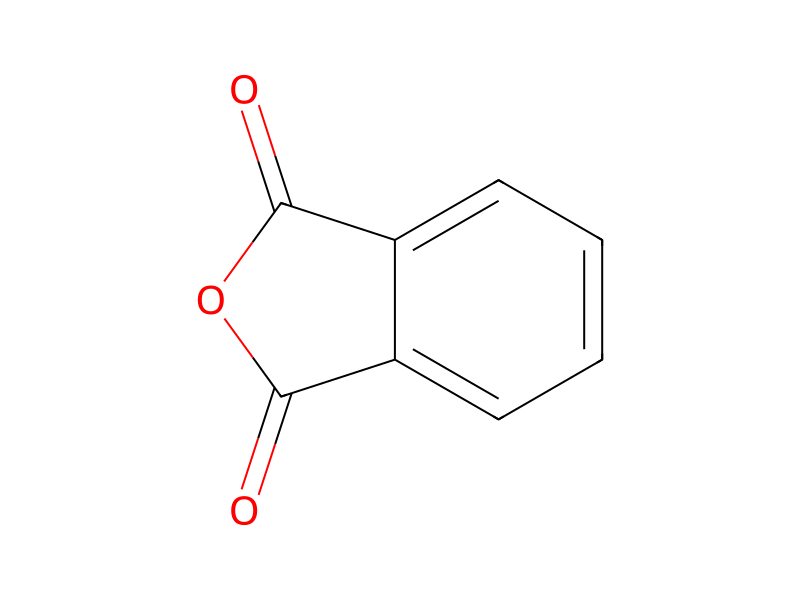




Conditions
- Temperature
- 100 °C
Procedure
A mixture of the product of Example 350A (0.54 g, 3 mmol), phthalic anhydride (1.36 g, 2.2 eq.) and diisopropylethylamine (1.97 g, 5 eq.) in dioxane (20 mL) was heated at 100° C. for 2 hours, cooled to 25C and concentrated. The residue was triturated with water and ether. The resulting solids were filtered and dried in vacuum to give the title compound (0.6 g, 64% crude yield) which was used directly for the next step. 1H NMR (300 MHz, DMSO-d6) δ 5.95 (s, 1H), 7.37 (m, 1H), 7.6 (m, 2H), 7.95-8.1 (m, 5H), 12.18 (s, 1H). MS (DCI+) m/z 306 (M+H)+.
Workup
- concentrationconcentrated
- customThe residue was triturated with water and ether
- filtrationThe resulting solids were filtered
- customdried in vacuum
Sources & evidence
- ORD record
- ord-0ade6daeba374a598172e88fc5215c21
- Source dataset
- uspto-grants-2011_03
- Patent number
- US07902203B2
Reaction notes
Loading…