Pyridine → Ethyl 3-aminoquinoline-2-carboxylate
Reaction equation

Br[CH2:2][C:3](=O)[C:4]([O:6][CH2:7][CH3:8])=[O:5].[N:10]1C=CC=CC=1.[NH2:16][C:17]1[CH:24]=[CH:23][CH:22]=[CH:21][C:18]=1[CH:19]=O.N1CCCC1>CCO>[NH2:10][C:2]1[C:3]([C:4]([O:6][CH2:7][CH3:8])=[O:5])=[N:16][C:17]2[C:18]([CH:19]=1)=[CH:21][CH:22]=[CH:23][CH:24]=2Participants
Reactant 4


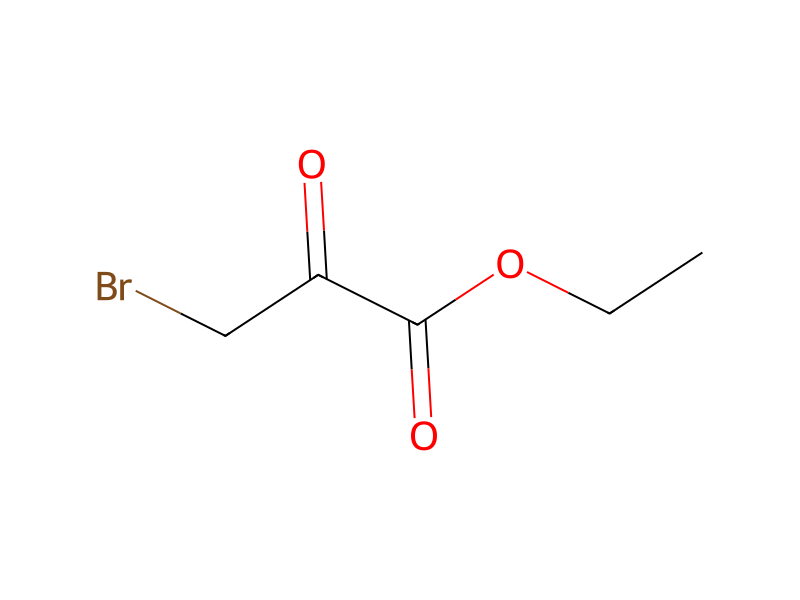

Product 1

Reagents, catalysts & solvents 1

Conditions
- Temperature
- 65 °C
Procedure
A solution of ethyl bromopyruvate (1.69 g, 1.09 mL, 8.68 mmol) in dry EtOH (16 mL) was added dropwise over 20 min to a stirred solution of pyridine (684 mg, 699 μL, 8.68 mmol) in dry EtOH (24 mL). The resulting solution was heated at 60-70° C. for 1 h and cooled to room temperature. 2-Aminobenzaldehyde (1.00 g, 8.26 mmol) and pyridine (1.6 mL) were added and the resulting yellow solution was heated at reflux for 4½ h. Pyrrolidine (1.40 g, 1.64 mL, 19.7 mmol) was added and the resulting mixture was heated at reflux for 3 h and concentrated in vacuo to give the crude product. This was purified by flash chromatography (Si, 65×160 mm, 0-40% EtOAc in hexanes gradient) to afford ethyl 3-aminoquinoline-2-carboxylate, as a yellow solid. Rf=0.31 (20% EtOAc/hexanes). LCMS calc.=217.1; found=217.1 (M+1). 1H NMR (500 MHz, CDCl3): δ 8.04-8.02 (m, 1H); 7.53-7.51 (m, 1H); 7.44-7.38 (m, 2H); 7.32 (s, 1H); 4.53 (q, J=7.1 Hz, 2H); 1.48 (t, J=7.1 Hz, 3H).
Workup
- temperaturecooled to room temperature
- temperaturethe resulting yellow solution was heated
- temperatureat reflux for 4½ h
- temperaturethe resulting mixture was heated
- temperatureat reflux for 3 h
- concentrationconcentrated in vacuo
- customto give the crude product
- customThis was purified by flash chromatography (Si, 65×160 mm, 0-40% EtOAc in hexanes gradient)
Sources & evidence
- ORD record
- ord-abd5d8ee8dae45fc881c1008a7e3b8f3
- Source dataset
- uspto-grants-2011_03
- Patent number
- US07910592B2
Reaction notes
Loading…