Hydrochloric Acid → 4-(3-Amino-phenoxy)-N-(3-bromo-phenyl)-3-nitro-benzamide
Reaction equation

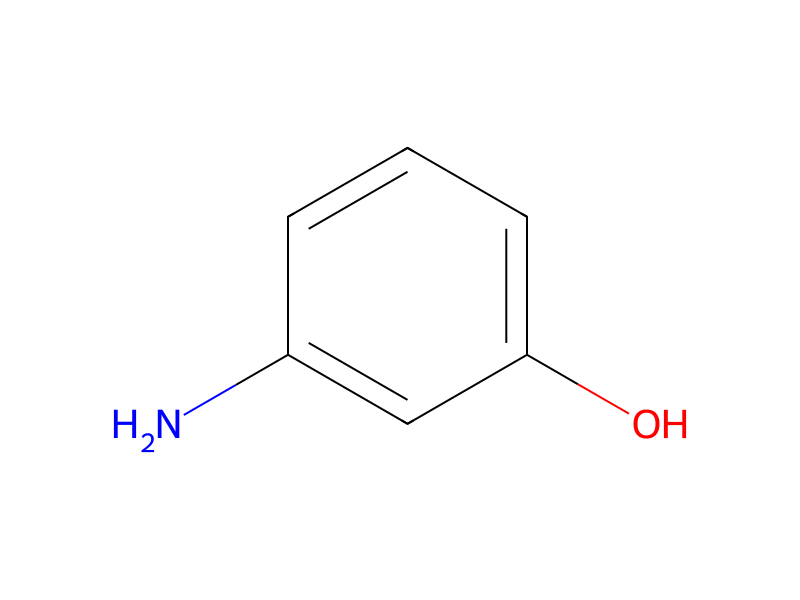
[Br:1][C:2]1[CH:3]=[C:4]([NH:8][C:9](=[O:20])[C:10]2[CH:15]=[CH:14][C:13](Cl)=[C:12]([N+:17]([O-:19])=[O:18])[CH:11]=2)[CH:5]=[CH:6][CH:7]=1.[NH2:21][C:22]1[CH:23]=[C:24]([OH:28])[CH:25]=[CH:26][CH:27]=1.[OH-].[K+].Cl>CS(C)=O>[NH2:21][C:22]1[CH:23]=[C:24]([CH:25]=[CH:26][CH:27]=1)[O:28][C:13]1[CH:14]=[CH:15][C:10]([C:9]([NH:8][C:4]2[CH:5]=[CH:6][CH:7]=[C:2]([Br:1])[CH:3]=2)=[O:20])=[CH:11][C:12]=1[N+:17]([O-:19])=[O:18]Participants
6





Procedure
A solution of N-(3-Bromo-phenyl)-4-chloro-3-nitro-benzamide (from Example 16A) (0.71 g, 2.0 mmol), 3-aminophenol (0.22 g, 2.0 mmol) and powdered potassium hydroxide (0.23 g, 4.0 mmol) in Dimethyl sulfoxide (5 mL) was heated at 100° C. for 30 minutes. After cooling to room temperature the mixture was poured into ice water (100 mL) and the resultant solution adjusted to pH 5 with 1N aqueous hydrochloric acid. The solution was then extracted with ethyl acetate (3×50 mL), the combined extracts dried over sodium sulfate, filtered and concentrated under vacuum to provide the title compound (0.8 g, 93%).
Workup
- extractionThe solution was then extracted with ethyl acetate (3×50 mL)
- dry with materialthe combined extracts dried over sodium sulfate
- filtrationfiltered
- concentrationconcentrated under vacuum
Sources & evidence
- ORD record
- ord-85f71c1250e945e48d5209859e2cbe7f
- Source dataset
- uspto-grants-2011_03
- Patent number
- US07910595B2
Reaction notes
Loading…