Sodium Hydroxide → N-[(4-fluorophenyl)methylidene]hydroxylamine
Reaction equation

[OH-:1].[Na+].[F:3][C:4]1[CH:11]=[CH:10][C:7]([CH:8]=O)=[CH:6][CH:5]=1.Cl.[NH2:13]O>C(O)C.O>[F:3][C:4]1[CH:11]=[CH:10][C:7]([CH:8]=[N:13][OH:1])=[CH:6][CH:5]=1Participants
6
Reactant 3

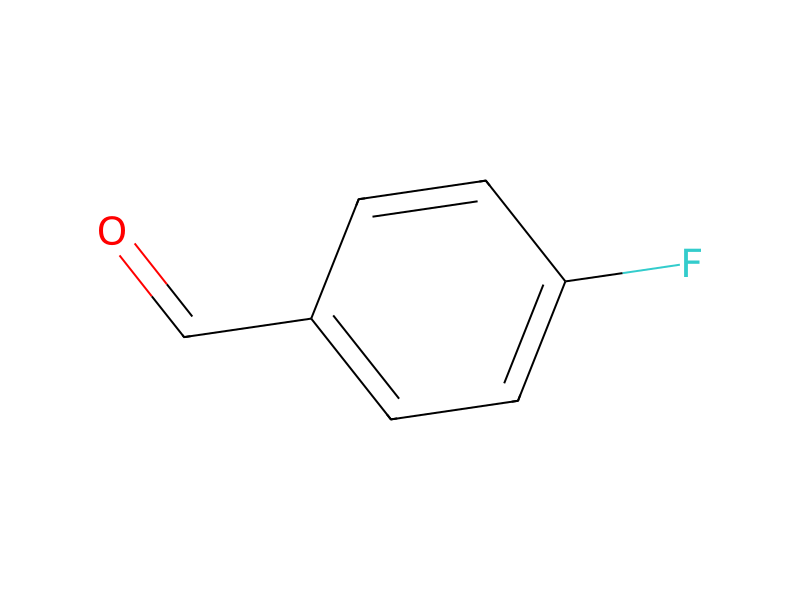

Product 1

Reagents, catalysts & solvents 2


Procedure
Aqueous sodium hydroxide (70 mL of 50% w/w) was added to a solution of 4-fluorobenzaldehyde (140.5 g, 1.132 mol) and hydroxylamine hydrochloride (86.5 g, 1.25 mol) in ethanol (1 L) and water (2 L), and the reaction was stirred at room temperature for one hour and then adjusted to pH 14 with the addition of 50% w/w aqueous sodium hydroxide. The mixture was extracted with several portions of dichloromethane and then several portions of chloroform. The combined extracts were concentrated under reduced pressure approximately one liter, filtered through a layer of CELITE filter agent and sodium sulfate, and concentrated again under reduced pressure to yield 127 g of 4-fluorobenzaldehyde oxime as a white solid.
Workup
- extractionThe mixture was extracted with several portions of dichloromethane
- concentrationThe combined extracts were concentrated under reduced pressure approximately one liter
- filtrationfiltered through a layer of CELITE filter agent and sodium sulfate
- concentrationconcentrated again under reduced pressure
Sources & evidence
- ORD record
- ord-acbb4399280e4f5c8eafa7ee82934823
- Source dataset
- uspto-grants-2011_03
- Patent number
- US07915281B2
Reaction notes
Loading…