Iodobenzene diacetate → Benzyl (3-Oxopropyl)carbamate
Reaction equation

[CH2:1]([O:8][C:9](=[O:15])[NH:10][CH2:11][CH2:12][CH2:13][OH:14])[C:2]1[CH:7]=[CH:6][CH:5]=[CH:4][CH:3]=1.CC1(C)N([O])C(C)(C)CCC1.C(OI(C1C=CC=CC=1)OC(=O)C)(=O)C>C(Cl)Cl>[CH2:1]([O:8][C:9](=[O:15])[NH:10][CH2:11][CH2:12][CH:13]=[O:14])[C:2]1[CH:7]=[CH:6][CH:5]=[CH:4][CH:3]=1Participants
Reactant 3


Product 1

Reagents, catalysts & solvents 1

Procedure
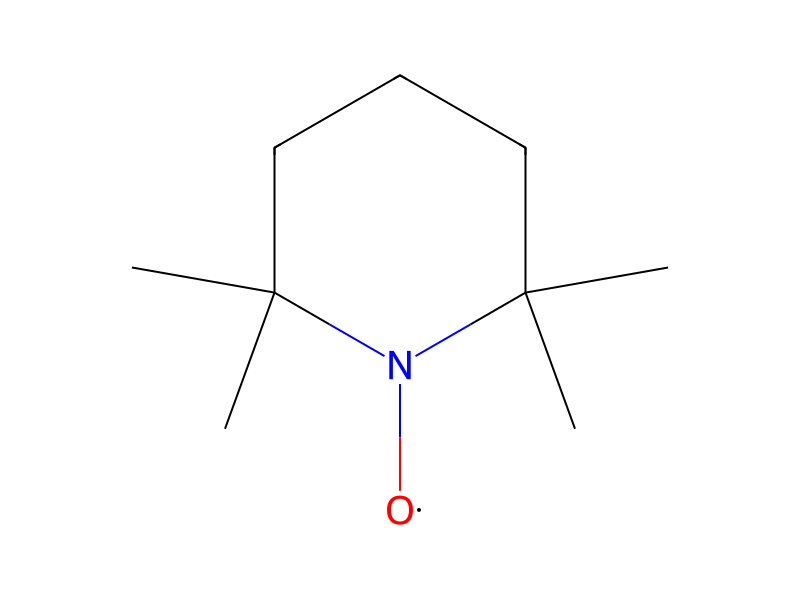
A solution of (3-hydroxy-propyl)-carbamic acid benzyl ester (100 g, 478 mmol) and 2,2,6,6-tetramethyl-1-piperidinyloxy, free radical (TEMPO; 7.5 g, 48 mmol) in DCM (1 L) was treated with (diacetoxyiodo)benzene, PhI(OAc)2, (170 g, 528 mmol) in three portions. After 18 h at rt, the mixture was slowly quenched with saturated aqueous (satd. aq.) NaHCO3. The organic layer was separated, washed with satd. aq. NaCl (500 mL), dried (Na2SO4), and concentrated. The residue was purified by FCC to give a solid, which was stirred in 1:1 Et2O/hexanes for 2 h. The solid was collected by filtration. Successive iterations were combined to provide the title compound as a white solid. 1H NMR (400 MHz, CDCl3): 9.81 (s, 1H), 7.36-7.31 (m, 5H), 5.14 (br s, 1H), 5.08 (s, 2H), 3.49 (q, J=6.0, 2H), 2.75 (t, J=5.7, 2H).
Workup
- customthe mixture was slowly quenched with saturated aqueous (satd. aq.) NaHCO3
- customThe organic layer was separated
- washwashed with satd
- dry with materialaq. NaCl (500 mL), dried (Na2SO4)
- concentrationconcentrated
- customThe residue was purified by FCC
- customto give a solid, which
- filtrationThe solid was collected by filtration
Sources & evidence
- ORD record
- ord-e7be2534e4f04920b6d9439d0284a44a
- Source dataset
- uspto-grants-2011_03
- Patent number
- US07915404B2
Reaction notes
Loading…