Trityl chloride → 5-phenyl-1-trityl-1H-tetrazole
Reaction equation

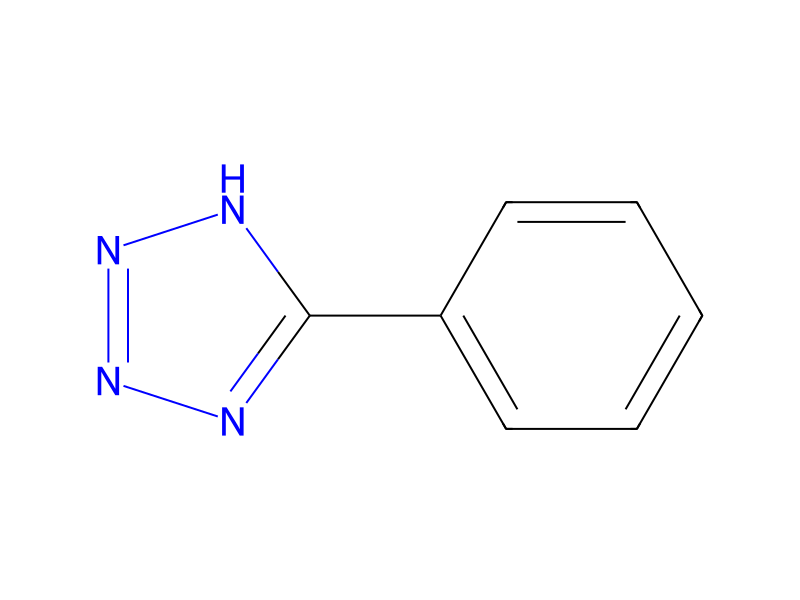
[C:1]1([C:7]2[NH:11][N:10]=[N:9][N:8]=2)[CH:6]=[CH:5][CH:4]=[CH:3][CH:2]=1.[C:12](Cl)([C:25]1[CH:30]=[CH:29][CH:28]=[CH:27][CH:26]=1)([C:19]1[CH:24]=[CH:23][CH:22]=[CH:21][CH:20]=1)[C:13]1[CH:18]=[CH:17][CH:16]=[CH:15][CH:14]=1>>[C:12]([N:8]1[C:7]([C:1]2[CH:2]=[CH:3][CH:4]=[CH:5][CH:6]=2)=[N:11][N:10]=[N:9]1)([C:13]1[CH:18]=[CH:17][CH:16]=[CH:15][CH:14]=1)([C:25]1[CH:26]=[CH:27][CH:28]=[CH:29][CH:30]=1)[C:19]1[CH:20]=[CH:21][CH:22]=[CH:23][CH:24]=1Participants
3


Procedure
The Compound of the formula 11 is prepared from 5-phenyl tetrazole of the formula 14 by reacting with trityl chloride to get N-trityl-5-phenyl tetrazole of the formula 13, which on reaction with butyl lithium and triisopropyl borate followed by hydrolysis to give compound of the formula 11. This process is shown in the Scheme 7
Sources & evidence
- ORD record
- ord-74c7cd96a62448d38f48687874e3d111
- Source dataset
- uspto-grants-2011_03
- Patent number
- US07915425B2
Reaction notes
Loading…