Hydrogen Bromide → HCID 19594652, compound
Reaction equation

C[O:2][C:3]1[CH:15]=[CH:14][C:13]2[C:12]3[C:7](=[CH:8][CH:9]=[CH:10][C:11]=3[O:16]C)[C:6](=[O:18])[C:5]=2[CH:4]=1.C1(=O)C2C(C3C(C=2)=CC=CC=3)=CC=C1.Br>C(O)(=O)C.C(Cl)Cl>[OH:2][C:3]1[CH:15]=[CH:14][C:13]2[C:12]3[C:7](=[CH:8][CH:9]=[CH:10][C:11]=3[OH:16])[C:6](=[O:18])[C:5]=2[CH:4]=1Participants
Reactant 3


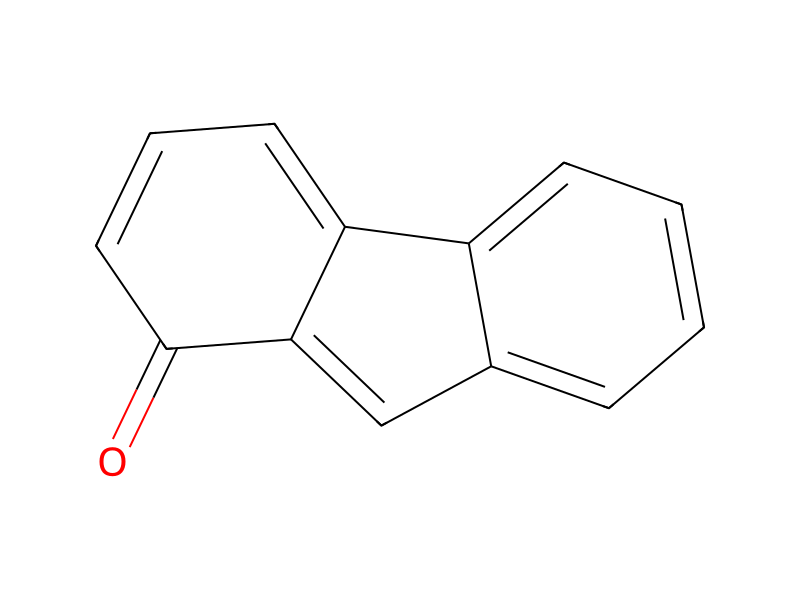
Product 1

Reagents, catalysts & solvents 2


Conditions
- Temperature
- 80 °C
Procedure
Prepare a solution of 2,5-dimethoxy-fluoren-9-one (7.5 g, 0.031 mmole) in 50 mL glacial acetic acid and warm to 80° C. Once all of the fluorenone goes into solution, add 150 mL hydrogen bromide (48% solution). Continue heating to reflux, redissolving any precipitate formed, and reflux overnight. Cool to room temperature and filter. Wash the filtrate with water. Take-up the solids in ethyl acetate and dissolve by heating in a steam bath. Filter through a short column of silica, eluting with hot ethyl acetate. Condense the ethyl acetate eluent on a rotary evaporatory to obtain a dark red solid. Heat in hot methylene chloride to dissolve undesired solid and filter to obtain 2,5-dihydroxy-fluoren-9-one. m.p. 298-301 dec. (Yield 9.4 g, 97%).
Workup
- temperatureContinue heating
- temperatureto reflux
- dissolutionredissolving any precipitate
- customformed
- temperaturereflux overnight
- temperatureCool to room temperature
- filtrationfilter
- washWash the filtrate with water
- dissolutiondissolve
- temperatureby heating in a steam bath
- filtrationFilter through a short column of silica
- washeluting with hot ethyl acetate
- customCondense the ethyl acetate eluent on a rotary evaporatory
- customto obtain a dark red solid
- dissolutionto dissolve undesired solid
- filtrationfilter
Sources & evidence
- ORD record
- ord-5e2a1ac631fa4b2cb05b6313f1d5e9f6
- Source dataset
- uspto-grants-1999_12
- Patent number
- US06004959
Reaction notes
Loading…