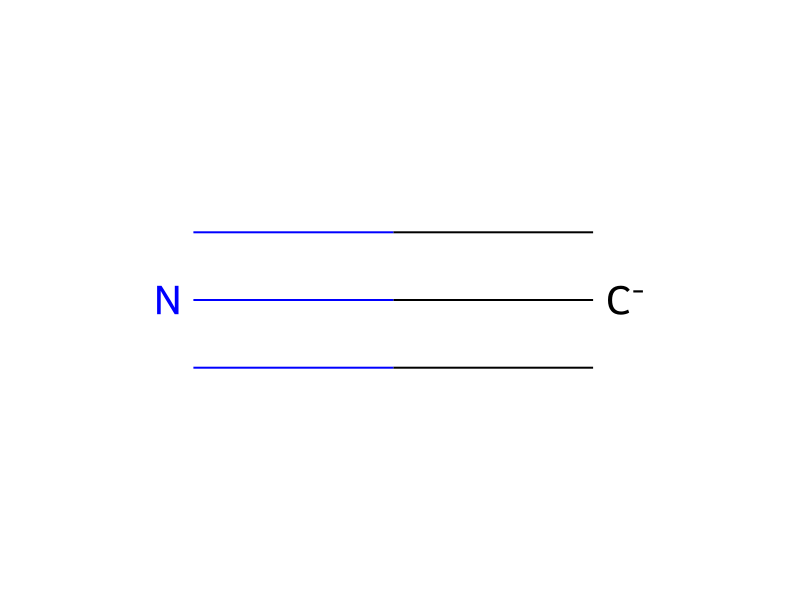
Cyanide → 3-(m-Chloro-alpha,alpha-dimethylbenzyl)-1-cyclohexyl-1-methylurea
Reaction equation

[CH3:1][NH:2][CH:3]1[CH2:8][CH2:7][CH2:6][CH2:5][CH2:4]1.[Cl:9][C:10]1[CH:11]=[C:12]([CH:19]=[CH:20][CH:21]=1)[C:13]([N:16]=[C:17]=[O:18])([CH3:15])[CH3:14].[C-]#N>CCCCCC.C1C=CC=CC=1>[Cl:9][C:10]1[CH:11]=[C:12]([CH:19]=[CH:20][CH:21]=1)[C:13]([NH:16][C:17](=[O:18])[N:2]([CH:3]1[CH2:8][CH2:7][CH2:6][CH2:5][CH2:4]1)[CH3:1])([CH3:15])[CH3:14]Participants
6



Procedure
A solution of 1.2 g of N-methyl-N-cyclohexylamine in 5 ml of n-hexane was added to a solution of 0.01 mole of m-chloro-α,α-dimethylbenzyl isocyanate (prepared from the corresponding cyanide in the same way as shown in Synthesis Example 1) in 10 ml of benzene. The mixture was kept at room temperature for 6 hours and concentrated under reduced pressure to obtain crystals, which were recrystallized from n-hexane to give 2.8 g of the title compound as white crystals.
Workup
- concentrationconcentrated under reduced pressure
- customto obtain crystals, which
- customwere recrystallized from n-hexane
Sources & evidence
- ORD record
- ord-38dc2c6bcd744c38b6d1f74a83f09570
- Source dataset
- uspto-grants-1979_03
- Patent number
- US04143061
Reaction notes
Loading…