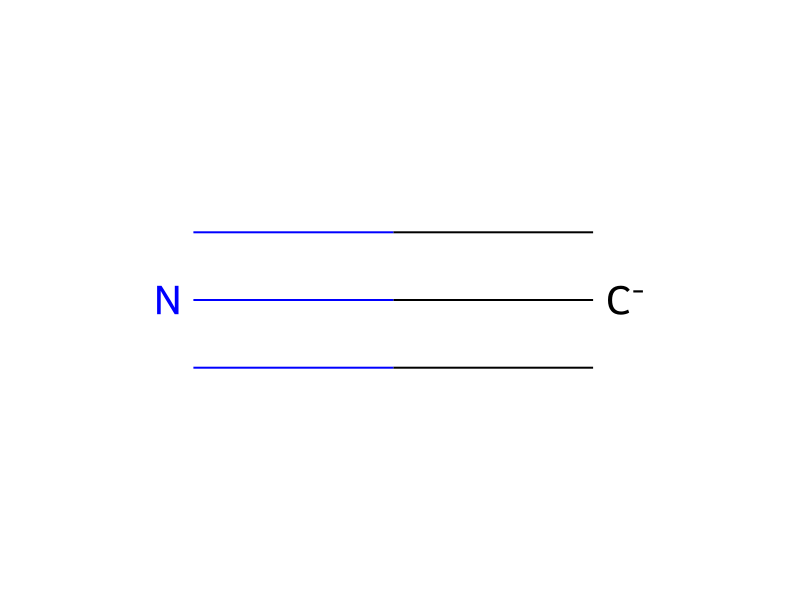
Cyanide → 3-(m-Chloro-alpha,alpha-dimethylbenzyl)-1-hydroxy-1-phenylurea
Reaction equation

[C:1]1([NH:7][OH:8])[CH:6]=[CH:5][CH:4]=[CH:3][CH:2]=1.[Cl:9][C:10]1[CH:11]=[C:12]([CH:19]=[CH:20][CH:21]=1)[C:13]([N:16]=[C:17]=[O:18])([CH3:15])[CH3:14].[C-]#N>C1C=CC=CC=1>[Cl:9][C:10]1[CH:11]=[C:12]([CH:19]=[CH:20][CH:21]=1)[C:13]([NH:16][C:17](=[O:18])[N:7]([OH:8])[C:1]1[CH:6]=[CH:5][CH:4]=[CH:3][CH:2]=1)([CH3:15])[CH3:14]Participants


Procedure
A solution of 2.2 g of N-phenylhydroxylamine in 10 ml of benzene was added to a solution of 0.02 mole of m-chloro-α,α-dimethylbenzyl isocyanate (prepared from the corresponding cyanide in the same way as in Synthesis Example 1) in 10 ml of benzene. The mixture was stirred well and allowed to stand overnight. The precipitated crystals were filtered off and washed with n-hexane to yield 5.7 g of 3-(m-chloro-α,α-dimethylbenzyl)-1-hydroxy-1-phenylurea. To 3.1 g of the urea was added a solution of 550 mg of sodium methoxide in 10 ml of methanol. The mixture was made homogeneous by stirring and 1.5 g of methyl iodide was added thereto. The mixture was then heated under reflux for 2 hours. The solvent was evaporated off and the residue was extracted with benzene and water was added. The benzene layer was dried over sodium sulfate and the solvent was distilled off to give crystals, which were recrystallized from a mixture of n-hexane and benzene to obtain 2.7 g of the title compound.
Workup
- filtrationThe precipitated crystals were filtered off
- washwashed with n-hexane
Sources & evidence
- ORD record
- ord-d6dfdecd111d4b66a5814d8ffe761e71
- Source dataset
- uspto-grants-1979_03
- Patent number
- US04143061
Reaction notes
Loading…