Aluminum fluoride → 4-Fluoro-2-(trifluoromethyl)aniline
Reaction equation

[F:1][C:2]([F:13])([F:12])[C:3]1[CH:8]=[CH:7][CH:6]=[CH:5][C:4]=1[N:9]=[N+]=[N-].F.[Al](F)(F)[F:16]>CCCCCC>[F:1][C:2]([F:13])([F:12])[C:3]1[CH:8]=[C:7]([F:16])[CH:6]=[CH:5][C:4]=1[NH2:9]Participants
Reactant 3

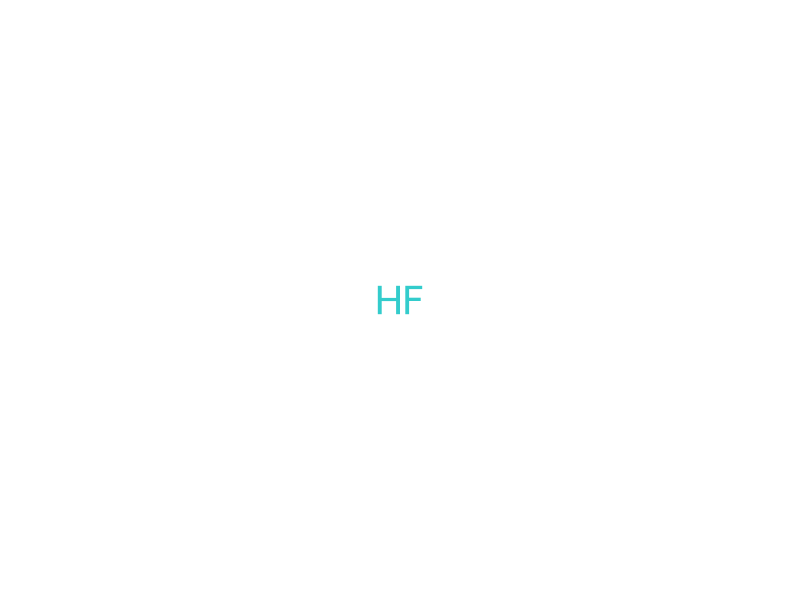

Product 1

Reagents, catalysts & solvents 1

Conditions
- Temperature
- 0 °C
Procedure
A mixture of 13.58g. (0.07 mole) of 2-trifluoromethylphenylazide, 100 ml. of hexane, and 20 ml. of anhydrous hydrogen fluoride was treated with 1.0g. of AlF3, and the reaction mixture was then aged for 10 hours at room temperature with agitation. The reaction mixture was then cooled, vented, and rinsed from the bomb with 60 ml. of dichloromethane, followed by 50 ml. of water. After blowing off the hydrogen fluoride, the aqueous rinse was added to the residue, which was cooled to 0° C. and made alkaline (pH about 11) with KOH pellets. The residue was then extracted twice with 100 ml. of dichloromethane per extraction; and the extracts were dried over MgSO4, and then concentrated under reduced pressure to yield 9.68g. (77%) of a brown oil. Structure of the final product as 2-trifluoromethyl-4-fluoroaniline was confirmed by IR and NMR. The final product had a b.p. of 87°-90° C. at 40 mm. Hg.
Workup
- additionA mixture of 13.58g
- temperatureThe reaction mixture was then cooled
- washrinsed from the bomb with 60 ml
- washthe aqueous rinse
- additionwas added to the residue, which
- extractionThe residue was then extracted twice with 100 ml
- extractionof dichloromethane per extraction
- dry with materialand the extracts were dried over MgSO4
- concentrationconcentrated under reduced pressure
- customto yield 9.68g
Sources & evidence
- ORD record
- ord-0feb713ec8a94c11989805c762b125dc
- Source dataset
- uspto-grants-1979_03
- Patent number
- US04145364
Reaction notes
Loading…